
Table of Contents
14 min read
Best AI Dashcams for Fleets in 2026 (Single, Dual & Multi-Channel)
Compare Btracking's AI dashcams for fleets — the BD1000, BDCV200, and BD2000 PRO — on channels, DMS driver monitoring, CANBus data, and onboard storage.


Why Most Fleets Outgrow a Single Road-Facing Camera
A road-facing camera records what happened in front of the vehicle — it does not record why. When an incident involves driver distraction, phone use, drowsiness, or an unbuckled seatbelt, the forward footage shows the outcome but leaves the cause invisible. That gap matters in two concrete ways: liability defense is incomplete without evidence of driver state at the moment of impact, and coaching programs have nothing to work with beyond the external event.
The scaling problem compounds this. A fleet that starts with a single-channel, road-facing unit and later needs driver monitoring or side and rear coverage typically faces a platform swap — ripping out existing hardware, retraining dispatchers, and migrating historical footage — because single-channel cameras are rarely designed to grow.
Btracking's approach is to treat channel count as a variable, not a fixed spec at purchase. The FleetCam platform runs from a 2-channel system up to a 4- or 6-channel PRO configuration by adding driver, dome, side, rear, and waterproof outdoor cameras as operational needs change. All channels — and the GPS data — report to the same Btracking platform throughout. A fleet that buys a 2-channel unit today is not locked out of DMS capability tomorrow; it adds the driver-facing camera and the platform already knows what to do with it.
The DMS camera specifically detects distraction, drowsiness, phone use, and no-seatbelt events, issues an in-cab audio/visual alert in real time, and flags the clip for review. That combination — immediate driver alert plus a reviewable clip — is what makes the footage actionable for both coaching and liability defense, rather than simply archival.
How We Evaluated These AI Fleet Dashcams
Every pick in this list was assessed against the criteria that actually matter in daily fleet operations — not benchmark labs.
AI Event Detection Accuracy The core job of any AI dashcam is catching real safety events without drowning dispatchers in false positives. We looked at whether each system runs AI edge processing onboard (so detection happens on the device, not after a cloud upload) and whether it triggers in-cab alerts in real time.
Driver Monitoring System (DMS) Capability DMS goes beyond the road-facing lens. Systems that support a dedicated DMS camera can detect distraction, drowsiness, phone use, and no-seatbelt events, then issue an in-cab audio/visual alert immediately and flag the clip for review — the combination that makes coaching and liability defense practical.
Channel Count and Expandability A two-channel setup covers road and cab; a four-to-six-channel system adds cargo, blind spots, or passenger areas. We noted each system's maximum channel count and whether it supports expansion, since retrofitting a second platform later costs more than buying expandable hardware upfront.
CANBus Integration Video alone tells half the story. CANBus integration ties camera footage to live vehicle data — speed, RPM, and fault codes — at the moment of an event, which is what separates a reviewable incident from a defensible one.
Video Quality and Low-Light Performance HD resolution and low-light visibility determine whether footage is actually usable after dark or in poor weather. We evaluated each system on whether its spec explicitly confirms both.
LTE Connectivity Live streaming, remote clip pull, and real-time alerts all depend on the cellular connection. We noted the LTE category where specified — higher categories support faster upload speeds for HD footage.
Onboard Storage Local storage keeps footage accessible even when connectivity drops. We noted storage capacity where the evidence stated it.
Price Cost was evaluated in the context of what each system delivers — an entry-level two-channel unit and an enterprise six-channel system serve different fleet sizes and budgets, and the right choice depends on matching capability to operational need.
The Best AI Fleet Dashcams in 2026: Our Top Picks
Btracking's 2026 dashcam lineup covers three distinct operator profiles — from a solo owner-operator watching costs to an enterprise fleet manager who needs six camera angles and live vehicle diagnostics. Here are the top picks, what each costs, and who should buy it.
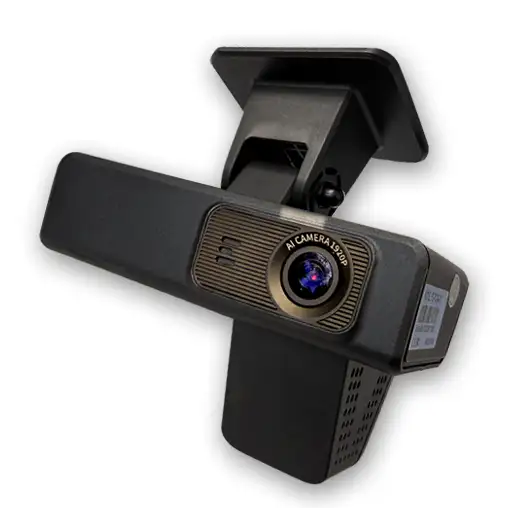
1. BD1000 FleetCam 2-Channel — Best Entry-Level AI Dashcam for Small Fleets and Owner-Operators
Price: $174.99
The BD1000 is the straightforward choice when you need AI-powered driver safety coverage without overcomplicating the install or the budget. It runs on AI edge processing onboard, handles 2-channel recording (road-facing plus in-cab driver view, or road-only if preferred), and captures crystal-clear HD footage with strong low-light visibility. Connectivity is LTE 4G CAT 1, and it carries dual storage up to 512GB, so footage stays on the unit even when the cellular link drops. The AI safety event detection layer flags incidents automatically and issues alerts, so you're not manually scrubbing hours of footage to find the moment that matters.
Who it's for: Owner-operators, small fleets, or any operation adding dashcams for the first time. At $174.99 per unit, it delivers the core AI safety and accountability features without the telematics overhead you may not yet need.
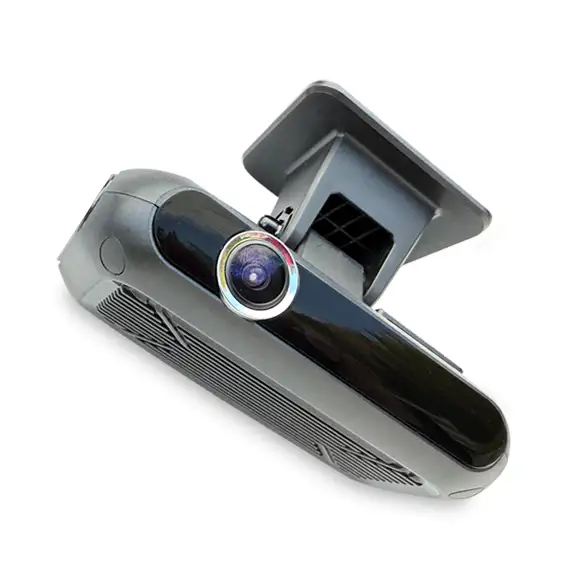
2. BDCV200 2-Channel AI Dashcam — Best All-in-One Telematics Dashcam
Price: $299.99 (with SD storage up to 512GB)
The BDCV200 is built around LTE Cat 6 connectivity, which means live data transmission without relying on a separate telematics device. It ships with onboard SD storage up to 512GB and supports a second camera for in-cabin or cargo coverage. CANBus vehicle data is available on the BDCV200 as an option. Where it steps ahead of a basic dashcam is in its expandability: the BDCV200 supports wired physical I/Os and BLE to connect various IoT peripherals, making it a hub rather than just a recorder. Optional ADAS (Advanced Driver Assistance System) and DMS (Driver Monitoring System, requires a DMS camera) are add-on layers — the DMS detects distraction, drowsiness, phone use, and no-seatbelt events, then fires an in-cab audio/visual alert in real time and flags the clip for later coaching or liability review.
Who it's for: Growing fleets that want a single device handling connectivity, storage, driver monitoring, and IoT expansion — without bolting on a separate telematics unit. The up-to-512GB storage variant at $299.99 is the practical choice for routes where cellular coverage is inconsistent.
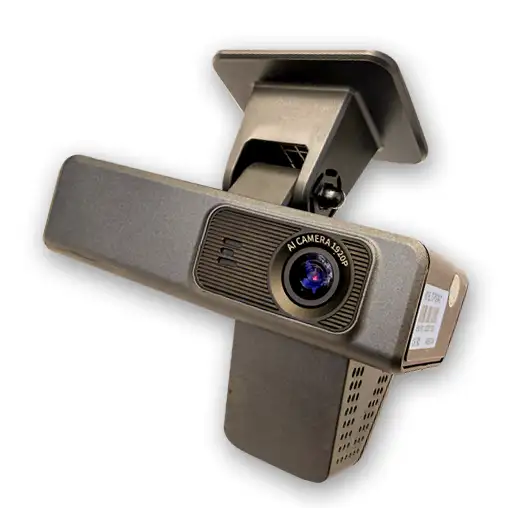
3. BD2000 Enterprise FleetCam PRO 4/6-Channel — Best Multi-Channel AI Dashcam for Larger Vehicles and Enterprise Fleets
Price: $299.99
The BD2000 is the top of the Btracking lineup and earns it. It supports up to 6-channel recording — road, driver, dome, side, rear, and waterproof outdoor cameras — all feeding into the same Btracking platform. AI edge processing runs onboard, so event detection doesn't depend on a cloud round-trip. Connectivity is LTE 4G CAT 1, and dual storage runs up to 1TB — the largest local buffer in the lineup, which matters when six channels are recording at once. The defining capability for fleet managers is CANBus integration: the BD2000 reads vehicle speed, RPM, fault codes, and more alongside the video record, so when an event is flagged on camera, you immediately see what the vehicle was doing mechanically at that exact moment. That pairing is what turns a dashcam clip into a defensible incident report.
Who it's for: Enterprise fleets operating larger vehicles — trucks, buses, coaches, construction equipment — where a 2-channel view is insufficient, and where tying video evidence directly to vehicle data is a compliance or liability requirement. At $299.99, it shares the top price in the lineup with the BDCV200, and it is the most capable unit.
Quick comparison
| BD1000 | BDCV200 | BD2000 | |
|---|---|---|---|
| Price | $174.99 | $299.99 | $299.99 |
| Max channels | 2 | 2 | 4/6 |
| LTE connectivity | LTE 4G CAT 1 | LTE Cat 6 | LTE 4G CAT 1 |
| Onboard storage | Dual storage up to 512GB | Up to 512GB | Dual storage up to 1TB |
| CANBus vehicle data | — | Optional | ✓ |
| DMS driver monitoring | ✓ | Optional | ✓ |
| AI edge processing | ✓ | ✓ | ✓ |
"—" indicates the spec was not stated in available evidence for that SKU.
Side-by-Side: BD1000 vs. BDCV200 vs. BD2000 PRO
All three cameras run on the same Btracking platform, so the comparison is about capability tier, not ecosystem fragmentation.
| Feature | BD1000 | BDCV200 | BD2000 PRO |
|---|---|---|---|
| Max Channels | 2 | 2 | Up to 6 |
| AI Event Detection | Yes | Yes | Yes |
| DMS Support | Yes (included) | Optional (DMS camera) | Yes (included) |
| CANBus Integration | — | Optional | Yes (speed, RPM, fault codes) |
| LTE Connectivity | LTE 4G CAT 1 | LTE Cat 6 | LTE 4G CAT 1 |
| Max Onboard Storage | Dual storage up to 512GB | Up to 512GB SD | Dual storage up to 1TB |
| Starting Price | $174.99 | $299.99 | $299.99 |
| Best For | Small fleets needing core AI dashcam coverage at an accessible price | Telematics-first fleets wanting all-in-one connectivity, optional DMS, and IoT expandability | Enterprise and truck fleets requiring multi-camera situational awareness and vehicle data tied to video |
How to choose. Start with the BD1000 at $174.99 if your priority is reliable AI event detection and road or road-plus-driver recording without added complexity — it covers the fundamentals at the lowest entry cost. Step up to the BDCV200 if you want built-in LTE Cat 6 telematics, optional DMS for distraction and drowsiness alerts, and the flexibility to connect IoT peripherals; at $299.99 it consolidates hardware you might otherwise source separately. Choose the BD2000 PRO at $299.99 when you need up to six channels covering driver, cargo, sides, and rear simultaneously, plus CANBus data that ties every on-camera event to what the vehicle was actually doing — speed, RPM, and fault codes in the same record. The critical scaling point: because all three models report footage and GPS to the same Btracking platform, a fleet that starts with two-channel BD1000 units can move to BD2000 PRO without retraining staff or migrating to a different software environment — channel count grows, the workflow stays the same.
Driver Monitoring (DMS): The Feature That Turns Footage Into Coaching
DMS is the capability that separates a dashcam from a true fleet safety system — without it, you have recorded evidence of an incident; with it, you have a tool that intervenes before one happens.
Btracking AI dashcams equipped with a DMS camera detect four high-risk behaviors in real time: distraction, drowsiness, phone use, and no-seatbelt. The moment a trigger event is detected, the unit fires an in-cab audio and visual alert — correcting the driver on the spot, before the situation escalates. Simultaneously, the system flags the clip for back-office review, giving the safety manager a timestamped, event-tagged piece of footage ready for a coaching session or liability defense.
That dual output — real-time correction for the driver, flagged clip for the manager — is what makes DMS operationally meaningful rather than just a spec-sheet checkbox.
Which Btracking units support DMS:
| Unit | DMS Support |
|---|---|
| BD1000 FleetCam 2 Channel AI Dashcam | 2-channel road & driver configuration supports driver-facing recording with AI safety event detection and alerts |
| BDCV200 2 Channel AI Dashcam | Optional DMS via add-on DMS camera; ADAS also available as an optional enhancement |
| BD2000 Enterprise FleetCam PRO | AI safety event detection and alerts across up to 6 channels, built on AI edge processing |
If driver monitoring is a hard requirement for your fleet, confirm the DMS camera option at purchase — the BDCV200 in particular requires the optional DMS camera to enable that capability. For fleets that need the widest camera coverage alongside DMS, the BD2000 PRO's up to 6-channel recording and CANBus vehicle data integration make it the most instrumented option in the Btracking lineup.
CANBus Integration: Why Vehicle Data Alongside Video Changes Everything
CANBus integration means the BD2000 Enterprise FleetCam PRO reads speed, RPM, fault codes, and more directly from the vehicle's own data bus and stamps that information to the same timeline as the video — so every recorded event carries the full mechanical context of what the truck was doing at that exact moment.
That context is what separates useful footage from actionable evidence. When a safety manager pulls up a harsh-braking clip, they don't just see the road ahead — they see the speed the driver was traveling, the engine RPM, and whether any fault codes were active before, during, or after the event. In an accident reconstruction or insurance dispute, that combination is far harder to challenge than video alone. An insurer asking "how fast was the vehicle going?" gets a precise answer pulled from the vehicle's own systems, not an estimate.
For driver coaching, the same data closes a common gap. A driver who triggers a harsh-braking alert at 62 mph on a 45 mph road needs a different conversation than one who braked hard at legal speed to avoid a hazard. Without the speed data tied to the clip, both incidents look identical in a video review. With CANBus data, the coaching is specific and defensible.
The BD2000 handles this through AI edge processing on the unit itself, which also supports up to 6-channel recording and HD footage with low-light visibility — all in a single system priced at $299.99. Fleet ops managers searching for an AI dashcam with CANBus vehicle data get the vehicle telemetry and the video in one place, without stitching together a separate telematics feed after the fact.
How to Choose the Right AI Dashcam for Your Fleet
The right dashcam depends on four variables: vehicle type, liability exposure, telematics needs, and budget. Work through each in order and the correct tier becomes obvious.
1. Fleet Size and Vehicle Type
Vans and passenger cars running local routes typically need a front and in-cabin view — a 2-channel setup covers that. Trucks, trailers, and vehicles with cargo compartments benefit from additional side, rear, or cargo cameras. Btracking's platform scales from 2 channels up to a 4- or 6-channel PRO configuration by adding driver, dome, side, rear, and waterproof outdoor cameras, all reporting to the same platform. If you operate a mixed fleet, you don't need separate systems for different vehicle classes — you add channels where the vehicle demands it.
2. Liability Exposure
If your drivers run high-risk routes, carry high-value cargo, or operate under DOT scrutiny, driver monitoring is not optional — it's a liability management tool. Btracking's DMS-equipped cameras detect distraction, drowsiness, phone use, and seatbelt non-compliance in real time, issuing an in-cab audio/visual alert and flagging the clip for review. That combination — coaching trigger plus timestamped video evidence — is what makes DMS worth the added cost for higher-exposure fleets.
3. Telematics Integration
Fleets that want a single system for GPS, vehicle diagnostics, and video should look at the BDCV200 and BD2000 tiers. The BDCV200 is an LTE Cat 6 dashcam with all-in-one telematics features; it supports wired physical I/Os and BLE to connect external sensors and devices, and it accepts an optional DMS camera. The BD2000 adds CANBus integration, pulling speed, RPM, and fault codes alongside video so every on-camera event is tied to exactly what the vehicle was doing at that moment. If your telematics and dashcam data currently live in separate systems, either of these units eliminates that gap.
4. Budget — Three Investment Tiers
| Tier | SKU | Price | Best Fit |
|---|---|---|---|
| Entry | BD1000 | $174.99 | Small fleets, basic front/cabin coverage, straightforward routes |
| Telematics-first | BDCV200 | $299.99 | Fleets needing IoT/BLE sensor integration or optional DMS, up to 2 channels |
| Full | BD2000 | $299.99 | Higher-liability operations requiring CANBus data, DMS, and multi-channel video |
The $125 spread between entry and full tier is a hardware decision, not a platform decision — all three units report to the same Btracking system.
5. Scalability
Starting small doesn't mean starting over. Because Btracking runs one platform across all channel counts, a fleet that deploys 2-channel units today can expand to 6-channel PRO configurations later without switching vendors, retraining staff, or migrating data. That matters most for fleets in growth mode or those piloting dashcams on a subset of vehicles before full rollout.
Quick Recommendations by Fleet Profile
- Small fleet, local delivery vans, cost-conscious: Start with the BD1000 at $174.99 — front and in-cabin coverage, room to scale.
- Mixed fleet with sensor integration needs or optional DMS: The BDCV200 at $299.99 handles IoT I/O, BLE connectivity, and optional driver monitoring in one unit.
- Long-haul trucks, high-value cargo, or compliance-driven operations: The BD2000 at $299.99 delivers CANBus vehicle data alongside multi-channel video and full DMS capability — the complete liability and coaching package.
Frequently asked questions
What is the best AI dashcam for a small fleet on a budget?
The Btracking BD1000 FleetCam 2-Channel AI Dashcam is priced at $174.99 and delivers AI safety event detection, HD footage with low-light visibility, and road plus driver-facing recording — making it the most accessible entry point for small fleets that still need real accountability features.
Which fleet dashcam supports driver monitoring (DMS) for distraction and drowsiness alerts?
Btracking's AI dashcams with a DMS camera detect distraction, drowsiness, phone use, and no-seatbelt events, issuing real-time in-cab audio and visual alerts and flagging the clip for coaching review. The BD1000, BDCV200 (with optional DMS camera), and BD2000 PRO all support DMS.
What is a multi-channel AI dashcam and do I need one for my trucks?
A multi-channel dashcam records from multiple cameras simultaneously — road-facing, driver-facing, side, and rear. For larger vehicles like box trucks or semi-trailers, the Btracking BD2000 Enterprise FleetCam PRO supports up to 6 channels, covering blind spots that a single forward camera cannot.
Does Btracking offer an AI dashcam with CANBus vehicle data integration?
Yes — the BD2000 Enterprise FleetCam PRO reads CANBus data including speed, RPM, and fault codes alongside video, so every recorded safety event is paired with what the vehicle was doing at that exact moment. It is priced at $299.99.
Can I start with a 2-channel dashcam and upgrade to more channels later without changing platforms?
Yes. Btracking's FleetCam is a single platform that scales from 2 channels up to 4 or 6 channels on the BD2000 PRO by adding driver, dome, side, rear, or waterproof outdoor cameras — all reporting to the same Btracking platform, so you never have to swap systems as your coverage needs grow.
Tags:
best ai dashcams for fleetsbest fleet dashcam with driver monitoringmulti channel ai dashcam for trucksai dashcam with canbus vehicle dataBtrackingBD1000 FleetCamBD2000 Enterprise FleetCam PROBDCV200Products in this guide
BD2000 Enterprise FleetCam PRO 4/6 Channel AI Dashcam System
BD1000 FleetCam 2 Channel AI Dashcam System
BDCV200 2 Channel AI Dashcam System
BDCV200 Dashcam with 256GB SD Storage
$299.99
Enterprise FleetCam
$174.99
Enterprise Fleet Cam
$299.99
Ultimate Hybrid Battery Powered Tracker
$237.49
Get a written quote
Tell us what you run. An engineer confirms the details and prices it.
Request a quote