
Table of Contents
12 min read
Cold Chain Monitoring for Refrigerated Trucks: A Complete Buyer's Guide (2026)
Effective cold chain monitoring for refrigerated trucks requires multiple wireless temperature sensors per trailer, real-time alerts that let drivers inter


Why One Sensor Is Never Enough for a 53-Foot Reefer Trailer
A single temperature sensor mounted near the reefer unit tells you what the air looks like at the nose — it tells you nothing about what's happening 45 feet away at the doors.
A 53-foot trailer is not a uniform thermal environment. The refrigeration unit drives cold air from the front through the reefer air chute, but that air stratifies vertically as it travels the length of the box. The nose zone, where the evaporator sits, routinely runs colder than the door zone, which absorbs ambient heat every time the trailer is opened, loaded, or staged at a dock. Pre-cooling cycles that appear complete at the nose may leave residual warm pockets near multi-temp bulkheads or in areas where cargo loading has created airflow shadows. Floor-level cargo and ceiling-level cargo can differ by several degrees even in the middle of the trailer. One sensor, wherever you mount it, produces one number — and that number is being used to certify the condition of every pallet in the load.
The compliance risk is straightforward: if your single sensor reads in-range but a warm pocket exists near the doors or along the floor, you have a load that fails inspection and a data record that says it passed. That gap is exactly what a shipper, receiver, or auditor will use to reject the load and dispute liability.
The practical fix is deploying multiple sensors positioned to cover the actual thermal zones of the trailer: nose, mid-point, door zone, and where product stacking creates airflow shadows.
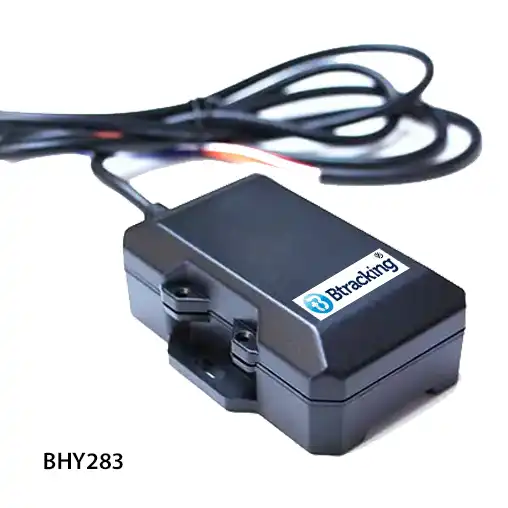
Btracking's BHY283 ($179.99) supports up to 8 temperature sensors, which is enough to instrument a 53-foot trailer end-to-end with sensors to spare for vertical stratification points. It is hardwired-hybrid powered, suited to trailers that sit idle between runs without draining a battery.
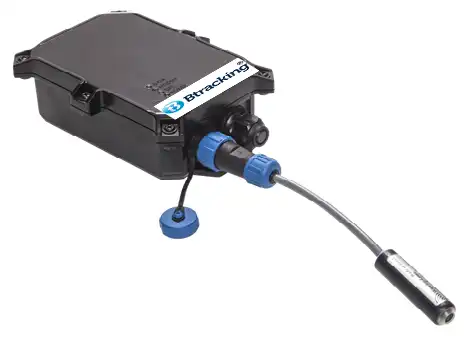
The BBTMX ($239.99) is a portable option that supports up to 6 wired sensors, of which 2 can be dual temperature/humidity sensors — relevant for produce and pharmaceutical loads where humidity excursions matter as much as temperature. It runs on a rechargeable battery rated for approximately one month at the default reporting interval of 2 readings every 30 minutes, and that interval is configurable.
Neither device forces you to guess which zone failed. With sensors placed at the actual risk points, you get a complete thermal picture of the load — and a defensible data record if a receiver pushes back.
Real-Time Alerts vs. Post-Trip Logs: Which Actually Saves a Load?
Only real-time alerts give anyone — driver, dispatcher, or fleet manager — the window to act before a load is lost. A post-trip log tells you exactly when the load failed; it does not give it back.
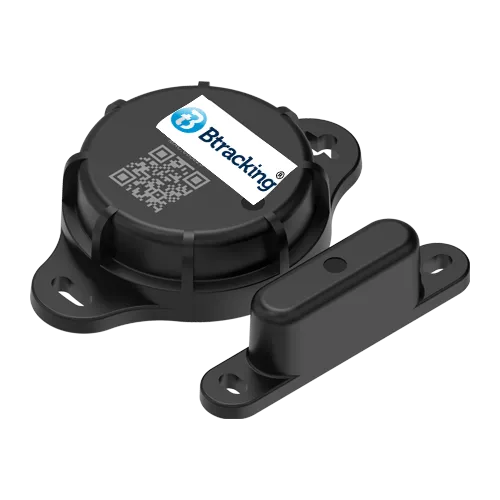
The distinction matters most at two moments: when a reefer door opens unexpectedly and when temperature starts drifting out of range. The BTTS Wireless BLE Combo Door & Temperature Sensor monitors both simultaneously. Its ±0.2 °C accuracy is what makes an alert actionable rather than noisy — at that resolution, you're catching a genuine drift early, not chasing sensor jitter. A threshold alert fired at ±0.2 °C gives a driver time to check the reefer unit and correct it before the excursion deepens.
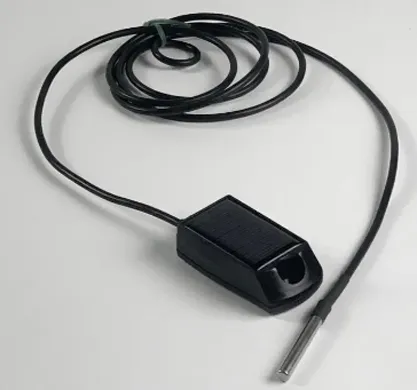
For the alert to matter, it has to reach someone immediately. The BTSPT Solar Powered BLE Temperature Sensor routes readings through the ProFleet platform via a connected GPS tracker, or directly through the DriverLink app — meaning a driver with a phone can receive an out-of-range notification without waiting for a back-office review cycle. That same delivery path applies whether the sensor is running on solar or its rechargeable battery.
The BBTMX Portable Temperature & Humidity Monitor takes this further by sending immediate alerts for temperature and humidity outside allowable ranges — that's a stated feature, not a default polling behavior. Its configurable reporting schedule (default: 2 readings every 30 minutes) means you can tighten the interval on high-value or sensitive loads.
Post-trip logs have a role — compliance documentation, carrier disputes, root-cause analysis. But none of that recovers a load of pharmaceuticals or fresh produce. The sensor hardware that starts at $34.99 for the BTTS is the entry point to a system where the alert reaches a human while there's still time to do something about it.
FSMA Temperature Logging Requirements: What Your System Must Actually Do
FSMA's Sanitary Transportation rule requires shippers and carriers of refrigerated food to establish, document, and maintain temperature controls — and to produce those records on request during an inspection or audit. Carriers need to be able to demonstrate temperature control throughout transit. That creates concrete system requirements your hardware and software should satisfy.
1. Continuous or interval-based automated logging
Records should reflect actual conditions throughout transit, not just at pickup and delivery. Your system needs to log at a frequency that demonstrates sustained control. The BBTMX defaults to 2 readings every 30 minutes, which produces 96 timestamped data points across a 24-hour run. That interval is configurable, so you can tighten it for high-risk loads (fresh produce, seafood) or extend it to preserve battery life on longer hauls. At the default rate, battery life runs approximately one month on a single charge.
2. Tamper-evident, timestamped records
Auditors need to see that records weren't edited after the fact. Automated sensor logs with server-side timestamps support this where manual paper logs do not. The BBTMX sends temperature, humidity, and location together in each transmission, so each record ties a condition reading to a place and time in a single entry — no manual correlation required.
3. Accessible retrieval on request
FSMA gives inspectors the right to request records. Cloud-stored logs that can be filtered by shipment, date range, or sensor ID are far faster to produce than paper or spreadsheet archives. Build retrieval into your workflow before you need it, not during an inspection.
Door status as a chain-of-custody layer
Temperature data alone doesn't explain why a spike occurred. The BTTS wireless door and temperature sensor adds real-time door-open/close events to the same record set. When an auditor sees a temperature excursion, a correlated door-open event at the same timestamp turns an anomaly into an explainable, documented event rather than an unexplained gap. The BTTS also logs temperature at ±0.2 °C accuracy, supporting precise documentation.
Operational checklist
| Requirement | What to verify in your system |
|---|---|
| Automated interval logging | Configurable reading frequency; default or tighter interval for regulated loads |
| Timestamped, tamper-evident records | Server-side timestamps; location + condition in each entry |
| On-request retrieval | Cloud access; filter by date, shipment, sensor |
| Chain-of-custody documentation | Door-open events correlated with temperature log |
No system eliminates compliance risk on its own — but a setup that logs continuously, records door events, and stores everything retrievably covers the operational foundation FSMA's Sanitary Transportation rule is built around.
Choosing the Right Sensor for Your Reefer Setup: A Side-by-Side Comparison
Sensor choice comes down to three practical variables: whether your trailer is powered or unpowered, whether you want a wired or wireless BLE installation, and whether solar charging is a realistic option for your operation.
Note on gateway dependencies: the BTK6 requires the BHYP tracker to relay readings to the platform — it cannot operate independently. The BTSPT sends readings via a connected GPS tracker or the DriverLink app. The BT1W requires a device with a 1-Wire interface. All other BLE sensors (BTTS, BTH1B) operate as standalone wireless sensors.
| SKU | Type | Accuracy / Key Spec | Battery Life | Price | Best-Fit Use Case |
|---|---|---|---|---|---|
| BTTS | Wireless BLE door + temperature combo | ±0.2 °C temperature accuracy | Up to 6 years | $34.99 | Trailers where door open/close events matter as much as temperature |
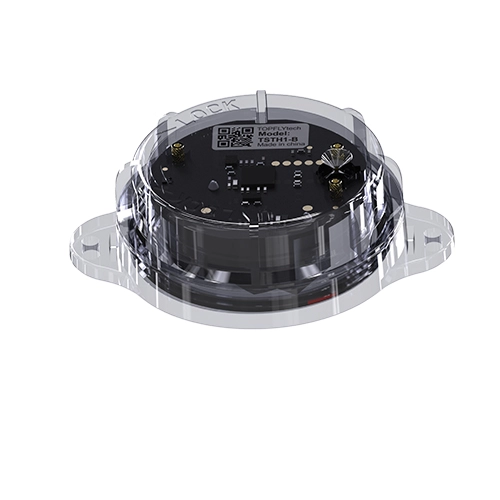
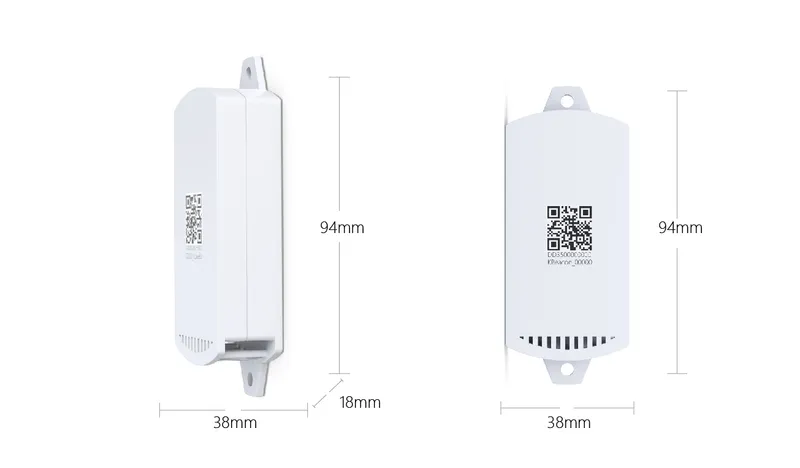
| BTH1B | Wireless BLE temperature + humidity | Replaceable CR2477 1,000 mAh battery | Up to 8 years | $34.99 | Unpowered trailers or cargo requiring both humidity and temperature monitoring |
| BTSPT | Solar + battery BLE temperature | Internal or external probe; $10/month DriverLink app subscription, billed separately | Solar battery: 5 yr; Rechargeable: 2 yr | $64.99 | Assets with sun exposure where eliminating battery swaps is the priority; requires GPS tracker or DriverLink app |
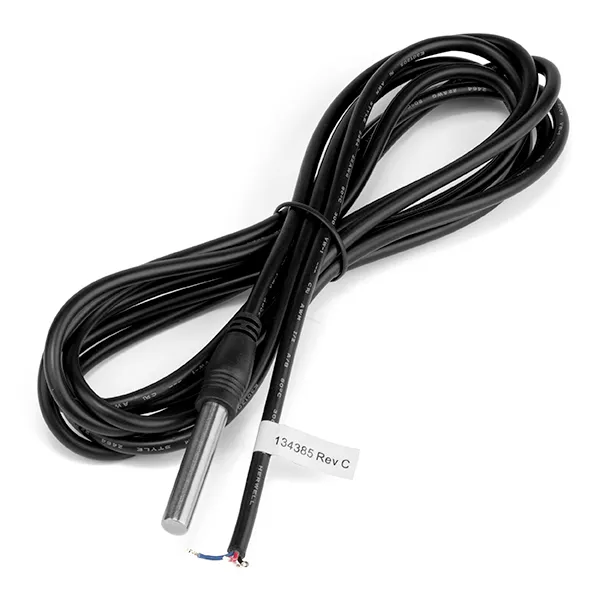
| BT1W | Wired external temperature (1-Wire interface) | 10 ft / 3 m cable (customizable) | No battery — wired | $23.99 | Powered trailers or units with an existing 1-Wire port |
| BTK6 | Wireless BLE temperature + humidity | Replaceable ER14505 lithium battery | Up to 8 years | $93.99 | Use with BHYP tracker only; tracker forwards readings to platform |
Quick decision tree:
- Need door open/close status alongside temperature? → BTTS ($34.99)
- Need humidity + temperature wirelessly, no tracker dependency? → BTH1B ($34.99)
- Need humidity + temperature and are running a BHYP tracker? → BTK6 ($93.99) — BHYP required
- Want zero routine battery maintenance and have solar exposure? → BTSPT ($64.99) — GPS tracker or DriverLink app required
- Have a 1-Wire interface and prefer a wired probe? → BT1W ($23.99)
Selecting a Cold Chain Tracker for Powered and Unpowered Trailers
The tracker itself — not just the sensor — determines whether you get live cellular reporting or data that only syncs when the asset reconnects to a network, so choosing the right hardware for your trailer type matters before you buy anything else.
Btracking offers three cold-chain trackers in this category, each suited to a different operational scenario:
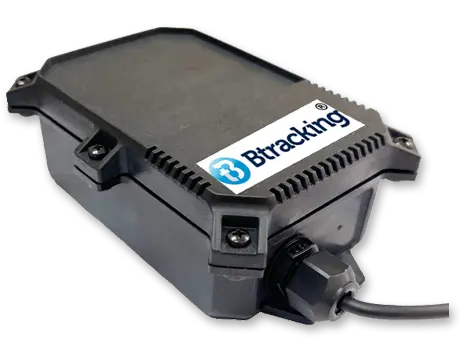
BHYP — $237.49 A hardwired hybrid unit built for powered trailers and equipment that may sit idle for extended periods. It is designed specifically for assets carrying high-value cargo that requires constant temperature and humidity monitoring while unattended. Because it is hardwired, it draws from the trailer's power when available and falls back to its internal battery when the asset sits idle. The BTK6 sensor is designed to work exclusively with this tracker.
BHY283 — $179.99 Also a hardwired hybrid tracker for powered trailers and machines that may sit idle. The key differentiator here is sensor capacity: the BHY283 supports up to 8 temperature sensors, making it the right choice when you need to monitor multiple zones — nose, mid-section, door zone, and airflow shadow points — inside a single trailer.
BBTMX — $239.99 A fully portable, rechargeable unit that requires no hardwiring. It supports up to 6 wired sensors (up to 2 of which can be dual temperature/humidity sensors), sends immediate alerts when readings fall outside allowable ranges, and operates on a configurable reporting interval. At the default setting of 2 readings every 30 minutes, battery life runs approximately 1 month on a single charge.
Why this matters for unpowered and drop trailers
A trailer sitting at a dock or a drop yard has no shore power connection. A hardwired-only tracker goes dark the moment the tractor disconnects. For those assets, you need either a hybrid unit with sufficient battery reserve or a fully portable unit like the BBTMX. The hybrid options (BHYP, BHY283) are designed with this idle-period scenario in mind; the BBTMX handles it without any wiring at all, which also makes it practical for containers, intermodal assets, or temporary deployments where running wire is not an option.
| Tracker | Price | Power | Max Sensors | Immediate Out-of-Range Alerts |
|---|---|---|---|---|
| BHYP | $237.49 | Hardwired + battery backup | — | — |
| BHY283 | $179.99 | Hardwired + battery backup | 8 temperature sensors | — |
| BBTMX | $239.99 | Rechargeable battery (portable) | 6 wired sensors | Yes |
BHYP max-sensor count and alert behavior not stated in available specifications; column dropped where value is absent.
If your fleet runs a mix of powered and drop trailers, the practical approach is to use hardwired hybrid units on tractors and trailers that stay connected, and battery or portable units on any asset that regularly sits disconnected from a power source.
Total Cost of Ownership: Hardware, Subscription, and the Cost of Doing Nothing
A properly spec'd cold-chain monitoring system for a single trailer can be assembled for roughly $320 in hardware — a number that becomes modest the first time it prevents a rejected load.
Here's the math, using current list prices:
| Line item | Unit cost | Qty | Subtotal |
|---|---|---|---|
| BHY283 Advanced Hybrid Asset Tracker | $179.99 | 1 | $179.99 |
| BTH1B Wireless Mini BLE Temperature & Humidity Sensor | $34.99 | 4 | $139.96 |
| Hardware total | $319.95 |
For ongoing monitoring, BTSPT sensors report through either a paired GPS tracker or the DriverLink app. The DriverLink app subscription is $10/month, billed separately — a flat app fee rather than a per-sensor charge, so adding sensors to the same trailer does not multiply it. Where the sensors report through a GPS tracker you already run, that tracker's own subscription applies instead.
Where battery life changes the labor equation:
Both the BTH1B and BTK6 sensors carry a rated battery life of up to 8 years. A replaceable CR2477 (BTH1B) or ER14505 lithium cell (BTK6) means a driver or dock worker swaps a cell roughly once nearly a decade — not a quarterly maintenance task. Multiply that across a fleet of 20 trailers with four sensors each and the avoided labor is real, even if the precise dollar figure depends on your own labor rates.
Bottom line: approximately $320 in hardware, $10/month for the DriverLink app subscription (billed separately, or the subscription on a GPS tracker you already run), and sensors that run up to 8 years between battery changes. The cost of doing nothing is whatever your next rejected load is worth.
Frequently asked questions
How many temperature sensors does a refrigerated trailer need?
A 53-foot trailer needs multiple sensors to capture temperature variance between the nose, mid-section, and door zones — one sensor cannot represent the full load. Btracking's BHY283 tracker supports up to 8 temperature sensors and the BBTMX supports up to 6 wired sensors, giving fleets the coverage to meet both operational and FSMA documentation standards.
What is the best wireless temperature sensor for a reefer fleet?
For most reefer fleets, the BTH1B ($34.99) offers high-accuracy wireless BLE temperature and humidity monitoring with up to 8-year battery life on a replaceable CR2477 cell — minimizing maintenance stops. If door-open alerts are also needed, the BTTS combo sensor ($34.99) adds real-time door status at the same price point.
What are the FSMA temperature logging requirements for refrigerated trucks?
FSMA's Sanitary Transportation rule requires carriers of refrigerated food to document temperature controls, maintain those records, and produce them on request. A compliant system must log readings at regular intervals automatically — the BBTMX, for example, defaults to 2 readings every 30 minutes on a configurable schedule — and generate timestamped records retrievable for audits.
Can a solar-powered temperature sensor work inside a refrigerated trailer?
Btracking's BTSPT is the only solar-powered cold chain temperature monitor in its lineup; it supports both an internal or external probe and carries a rechargeable battery with a 2-year life as backup when solar input is limited. At $64.99, plus the $10/month DriverLink app subscription billed separately, it's designed for situations where battery replacement is inconvenient.
How do cold chain trackers work on unpowered drop trailers?
Unpowered trailers need a battery or hybrid tracker that doesn't rely on vehicle power. The BHYP ($237.49) and BHY283 ($179.99) are both hardwired hybrid trackers built specifically for trailers and equipment that sit idle for extended periods, maintaining continuous temperature and humidity monitoring without a running tractor.
Tags:
cold chain monitoring for refrigerated trucksreefer temperature monitoring systemwireless temperature sensor for fleetfsma temperature logging requirementsBtrackingBTTSBTH1BBTSPTProducts in this guide
Wireless BLE Combo Door & Temperature Sensor
$34.99
BTH1B Wireless Mini BLE Temperature & Humidity Sensor
$34.99
BTSPT Solar Powered BLE Temperature Sensor
$64.99
Ultimate Hybrid Battery Powered Tracker
$237.49
External Temperature Sensor
$23.99
BTK6 BLE Temperature & Humidity Sensor
$93.99
Portable Temperature & Humidity Monitor
$239.99
Advanced Hybrid Asset Tracker
$179.99
Get a written quote
Tell us what you run. An engineer confirms the details and prices it.
Request a quote