If you suspect there’s a GPS tracker on your car, the good news is that most trackers are found in one of a handful of predictable spots. As a company that builds GPS trackers for businesses, we know exactly where these devices get installed — and what each type looks like. Here’s how to do a thorough sweep.
First: know what you’re looking for
Vehicle GPS trackers come in three basic forms:
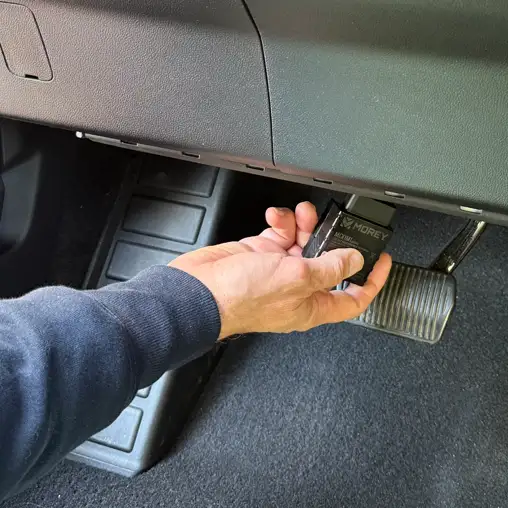
- Plug-in (OBD) trackers — small boxes, usually 2–3 inches, plugged directly into the OBD-II diagnostic port. They draw power from the port, so they never need charging. Ours look like a small matchbox with no screen. See a real example: the BP50 plug-in tracker.
- Hardwired trackers — wired into the vehicle’s power behind the dash. Nothing visible in the cabin; you’d find the small module and its wiring loom tucked behind panels. Example: a hardwired GPS tracker.
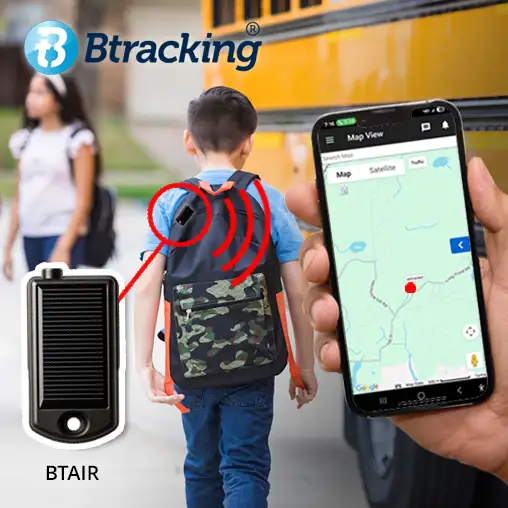
- Battery-powered / magnetic trackers — self-contained units, often in a weatherproof case with a strong magnet, stuck to any flat metal surface. These are the type used when someone doesn’t have inside access to the vehicle.
The 7 places to check, in order
- The OBD-II port. It’s under the dash, driver’s side, usually near your left knee. If anything is plugged into it that you didn’t put there, that’s a tracker (or a dongle from an insurance program).
- Under the seats and along seat rails. Battery trackers are commonly slipped under a seat or in the seat-back pocket.
- The undercarriage. Get a flashlight and (ideally) a telescoping mirror. Magnetic trackers attach to the frame rails, fuel tank straps, or any flat steel surface. Look for a small box, often black, sometimes in a matte weatherproof case.
- Inside and behind bumpers. Both front and rear bumpers have cavities where a battery tracker can sit.
- Wheel wells. Check behind the plastic liners — a common quick-placement spot.
- The trunk, spare-tire well, and tailgate cavity. Lift the spare tire; check under the trunk carpet and side compartments.
- Behind the dash (last, and hardest). A hardwired tracker requires panel removal to find. Signs include a wire tap on the fuse box or unfamiliar wiring with electrical tape that doesn’t match factory looms. If you’ve checked everything else, have a mechanic do a lift inspection and dash check.
Do GPS detector gadgets work?
Sometimes. RF detectors can pick up a tracker while it’s transmitting — but modern trackers transmit in short bursts every few seconds to few minutes, and some only report a few times a day to save battery. A cheap detector swept quickly around the car can easily miss a burst transmitter. A slow, methodical physical search finds more trackers than a detector does.
What to do if you find one
- If it’s in the OBD port and you didn’t consent to it, unplug it. Note: if the car is financed, some lenders disclose a tracker in the loan paperwork — check before assuming the worst.
- If you believe you’re being tracked by another person without consent, don’t destroy the device — photograph it in place and contact local police. Laws on tracking vary by state, but tracking a vehicle you don’t own is illegal in most circumstances.
- If it’s your employer’s vehicle, company vehicles are commonly tracked — that’s legal and increasingly standard for insurance and dispatch.
Tracking your own vehicles (the legitimate side)
We build trackers for the legal side of this: businesses tracking their own fleets, parents tracking their own cars, owners protecting equipment from theft. If that’s what brought you here, start with plug-in GPS vehicle trackers for cars and vans, or compare plug-in vs hardwired options. Questions? Talk to us — real people, US-based.