
Table of Contents
13 min read
Solar GPS Asset Trackers: How to Track Trailers & Containers with No Wiring (2026 Buying Guide)
Compare Btracking solar GPS asset trackers for no-wiring trailer and container tracking — mini, standard, and solar/hybrid combo models, from $119.99 to $289.99.
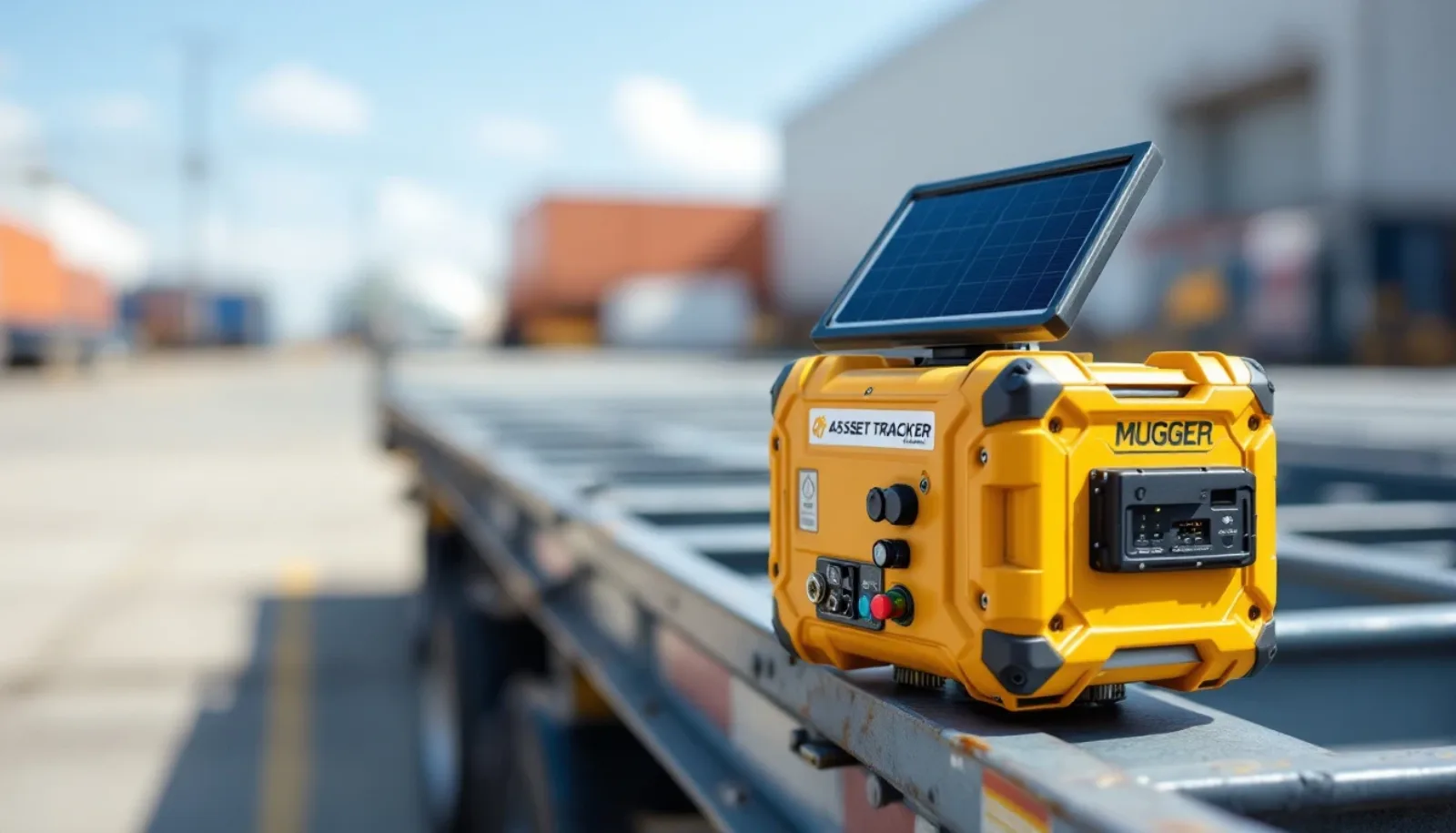

Why Solar Is the Right Choice for Unpowered Trailers and Containers
Solar trackers are the practical choice for unpowered trailers and containers because they eliminate the manual recharge cycle that makes battery-only trackers unworkable in real yard and field conditions.
Here is the core problem with "long-life" rechargeable trackers: even a device rated for several months of battery life eventually goes dark, and retrieving a trailer from a remote drop yard just to plug in a tracker defeats the entire point of tracking it. Miss the recharge window once and you have a blind asset — exactly the situation you were trying to avoid.
Solar sidesteps that problem entirely by harvesting ambient light to replenish the battery continuously. The BS130 carries a 15,000 mAh battery and needs only a couple of hours of sunlight every few days to maintain unlimited standby power. That means a trailer sitting in an uncovered lot, a rail yard, or a port terminal stays tracked indefinitely without anyone touching it.
The BS110 takes a different approach suited to tighter budgets or smaller installations: it can report 2 messages per day for up to 6 months on a single charge, and with an average of just 4 hours of sunlight a day it keeps itself topped off. If you need higher ping frequency — as often as every 5 minutes — it can sustain that for 1.5+ months on a single charge.
The practical principle behind both devices is the same: match your reporting interval to your solar budget and the tracker never dies. A trailer that only needs a daily check-in is a perfect fit for the BS110. A container that needs more frequent updates, or that sits in partial shade, is a better fit for the BS130's larger panel and battery. Either way, you stop scheduling recharge runs and start actually managing your fleet.
How Solar GPS Trackers Work: Ping Frequency, Battery Budget, and Sunlight Math
A solar GPS tracker is a battery-powered cellular device with a panel on top — the panel harvests light to replenish the battery, and the battery funds every ping it sends.
The basic loop:
- The onboard battery powers the GPS radio, cellular modem, and firmware.
- Each time the device reports its position, it draws a fixed charge from that battery.
- The solar panel trickle-charges the battery whenever light is available.
- If the panel puts back at least as much energy as the pings consume, the tracker runs indefinitely.
The variable you control is ping frequency — how often the device reports. Ping more often, drain faster. Ping less often, battery lasts longer. Sunlight shifts that equation by refilling the reservoir.
Concrete example — BS110:
The BS110 illustrates the tradeoff clearly. At the low end of activity — 2 messages per day — it runs for up to 6 months on a single charge with no solar input at all. Push the frequency to every 5 minutes and it can sustain that for about 2 hours per day for 1.5+ months on battery alone. Add just 4 hours of average daily sunlight and the device recharges continuously, meaning those higher ping rates become sustainable long-term rather than a countdown.
Battery capacity and the standby question — BS130:
The BS130 offers two battery configurations that anchor opposite ends of the spectrum:
| Battery | Longevity with a few hours of sunlight/day |
|---|---|
| 7500 mAh | Up to 10 years |
| 15000 mAh | Unlimited standby |
The 15000 mAh option only needs a couple hours of sunlight every few days to stay topped off. For assets parked in shade for extended stretches — covered yards, dense terminals — the larger battery buys you a much wider margin before a recharge deficit becomes a problem.
Solar Budget Reality: What Each Ping Scenario Actually Costs You
The table below maps the three main reporting scenarios against real-world light conditions. Reference device: BS110, which is the only solar SKU in the evidence with specific battery-vs-frequency data points. All figures use the conservative (lower-bound) number where the evidence gives a range — "1.5+ months" is presented as 1.5 months, "up to 6 months" is presented as 6 months. Figures for other light conditions not explicitly stated in the evidence are noted as such; do not extrapolate them as planning numbers.
| Ping scenario | Assumption | Full sun (≥ 4 hrs/day avg) | Reduced sun / partial shade | No sun / covered storage |
|---|---|---|---|---|
| 2 messages/day | BS110 default low-activity mode | Self-sustaining — solar replenishes battery (evidence-stated) | Not specified in evidence; monitor battery level seasonally | 6 months on battery alone (conservative; evidence-stated) |
| Hourly (~12–24 pings/day) | Intermediate rate not explicitly stated in evidence | Not specified in evidence | Not specified in evidence | Not specified in evidence — battery runway shorter than 6-month baseline |
| Every 5 min active (2 hrs/day) | BS110 high-activity mode | Self-sustaining with 4 hrs avg daily sun (evidence-stated) | Not specified in evidence — battery runway shortens | 1.5 months on battery alone (conservative; evidence-stated) |
Key assumptions and limitations:
- All figures apply to the BS110 at its stated operating conditions only. Do not apply them to other SKUs.
- The BS130's larger battery (up to 15,000 mAh) extends every cell in this table, but per-scenario figures for the BS130 are not stated in the evidence and are therefore not shown.
- For covered or shaded storage where solar input is near zero, use the conservative battery-only figures (6 months at 2 msg/day; 1.5 months at every-5-min active) as your planning numbers. Do not assume the rosier end of any range.
- The hourly ping row has no evidence-stated battery figure; treat it as bounded between the two stated rows and plan conservatively.
How to match your need before buying:
Ask two questions before selecting a solar tracker:
- How often do I actually need a position update? A trailer that moves once a week needs far fewer pings than a machine that shifts daily across a yard. Lower frequency = smaller battery or less sunlight required.
- How much reliable sunlight does my asset see? An outdoor container in a sun-exposed lot is a very different solar budget than equipment stored under a canopy.
If your asset gets consistent outdoor exposure and you only need daily or twice-daily check-ins, a compact unit like the BS110 covers you. If the asset sits in marginal light or you want a true set-and-forget installation with no maintenance window, the BS130's larger battery configuration is the right starting point.
Btracking Solar Tracker Lineup: Which Model Fits Your Asset?
All three solar trackers install without running a single wire — mount and done.
| Model | Price | Mount Options | Battery / Solar Spec | Internal Temp Sensor | Best For |
|---|---|---|---|---|---|
| BS110 | $119.99 | — | Solar-rechargeable; 4 hrs of daily sunlight sustains continuous operation; up to 6 months on a single charge at 2 msgs/day (conservative) | — | Trailers, containers, machines where a small footprint matters |
| BS130 | $189.99 | Screws, optional magnets, or adhesive strip | 15,000 mAh (stays charged with a couple hours of sunlight every few days) or 7,500 mAh (up to 10 years with a few hours of sunlight daily); BLE 5.3 | Yes | Assets needing unlimited standby power or basic temperature monitoring |
| BS400 | $289.99 | Screws, optional magnets, or adhesive strip | Deluxe solar/hybrid combo configuration | — | Assets that sit idle for long periods and need maximum configurability |
Column note: IP rating and monthly plan cost are not stated in the evidence for any solar SKU and are therefore omitted. The Internal Temp Sensor column is included because the BS130 evidence explicitly states it; "—" for BS110 and BS400 reflects that the evidence does not mention this feature for those SKUs — absence of mention is not a claim that the feature is absent.
Key takeaway by use case:
- Tight spaces or light loads → BS110 at $119.99 keeps the profile small.
- Long-term unattended deployment → BS130 at $189.99; the 15,000 mAh option is rated for unlimited standby power with minimal sun exposure.
- Maximum flexibility → BS400 at $289.99 covers the widest range of mounting and power configurations.
Installation in Minutes: No Wiring, No Electrician, No Downtime
The three solar models — BS110, BS130, and BS400 — mount without touching a single wire, making installation a one-person job that doesn't pull a trailer out of rotation.
All three share the same mounting approach: screws, optional magnets, or an adhesive strip. No power connector harness, no cutting into trailer wiring, no electrician. The BS130 spec puts it plainly — it screws on in minutes. Pick your mounting method, put it on the asset, and you're done. The BS110 and BS400 follow the same logic: same screw/magnet/adhesive options, same zero-wiring requirement.
That matters most when the asset is dark — no shore power, no running engine, sitting in a yard or a lot for days or weeks. A solar tracker doesn't care. The BS130 carries a 15,000 mAh battery that stays charged with just a couple hours of sunlight every few days. The BS110 can report 2 messages per day for up to 6 months on a single charge (conservative; no solar input assumed), and sustains more frequent reporting as long as it sees an average of 4 hours of sunlight a day. These units are designed to be installed once and left alone.
The hybrid models — BHY212B, BHY283, and BHYP — are a different tool for a different job. All three are hardwired hybrid trackers built for powered trailers and equipment, and they require a power connector harness (the BHY212B, for example, offers harness options in 30 cm and 3 m lengths). When shore power is consistently available, that connection makes sense. When it isn't — when a trailer sits dark in a yard for weeks — wiring it up just to power a tracker adds install time, cost, and a dependency that doesn't exist with solar.
For truly unpowered assets, solar is the only install-once, forget-it answer.
When to Upgrade: Cold Chain, Temperature Monitoring, and Hybrid Options
If your trailer or container carries temperature-sensitive cargo, a standard location-only tracker isn't enough — you need a device that monitors conditions and fires alerts the moment something goes out of range.
BBTMX ($239.99) is the portable option. It supports up to 6 wired sensors, of which 2 can be dual temp/humidity sensors, and sends immediate alerts when readings fall outside your allowable ranges. At the default schedule of 2 readings every 30 minutes, the battery lasts approximately 1 month before it needs recharging. That recharge requirement is the key constraint: the BBTMX works well on assets that regularly return to a dock or are paired with a power source, but it's a liability on a trailer that sits in a yard for weeks without human contact.
BHY283 ($179.99) is the step up for powered trailers. It's a hardwired hybrid that draws from the trailer's power supply while maintaining battery backup for idle periods. It supports up to 8 temperature sensors — the highest sensor count in this lineup — making it the right fit when you need to monitor multiple zones in a single trailer.
BHYP ($237.49) is positioned as the ultimate hybrid for powered trailers requiring constant cold-chain monitoring. Like the BHY283, it's hardwired with battery backup, built for assets that sit unattended for extended periods while still needing uninterrupted temperature and humidity oversight.
Choosing between them comes down to power availability:
| Device | Price | Power Source | Max Temp Sensors | Best For |
|---|---|---|---|---|
| BBTMX | $239.99 | Rechargeable battery | 6 wired (2 dual temp/humidity) | Portable use; assets with regular dock access |
| BHY283 | $179.99 | Hardwired + battery backup | 8 | Powered trailers, multi-zone monitoring |
| BHYP | $237.49 | Hardwired + battery backup | — | Powered trailers needing constant cold-chain coverage |
Column note: The Max Temp Sensors cell for BHYP is "—" because the evidence does not state a sensor count for that SKU. This is not a claim that the device lacks sensor support.
If the asset is truly unpowered and cold-chain monitoring is non-negotiable, evaluate two paths: pair a solar-assisted tracker with a separate wired sensor solution, or reclassify the asset as powered by running a dedicated power line. Relying on a rechargeable battery device alone on an unattended, unpowered asset is a maintenance problem waiting to become a spoilage claim.
Total Cost of Ownership: Solar vs. Rechargeable Battery Trackers
Solar trackers eliminate recharge labor entirely on sun-exposed assets — that's the core TCO argument, and it compounds fast at scale.
The labor math is straightforward. If a yard manager recharges 20 rechargeable outdoor trackers on a quarterly schedule, that's 80 service events per year. Each one means pulling the asset, climbing a ladder, or dispatching a technician. Solar reduces that number to zero on assets with adequate sun exposure. The hardware cost difference between a solar and a rechargeable unit often pays for itself before the first recharge cycle is complete.
Btracking's solar lineup by price point:
| Model | Price | Power Approach | Mount Options |
|---|---|---|---|
| BS110 | $119.99 | Solar — mini form factor for trailers, containers, machines | — |
| BS130 | $189.99 | Solar — 15,000 mAh battery stays charged with a couple hours of sunlight every few days | Screws, optional magnets, or adhesive strip |
| BS400 | $289.99 | Solar/hybrid combo for trailers, containers, machines | Screws, optional magnets, or adhesive strip |
The BS130's spec is worth noting directly: its 15,000 mAh battery is described as providing unlimited standby power under normal solar conditions, requiring only a few hours of sunlight every few days. That's a meaningful operational guarantee for assets that sit in yards or on lots between jobs.
Where rechargeable and battery units still make sense:
| Model | Price | Power Approach |
|---|---|---|
| BHY212B | $139.99 | Rechargeable hybrid, requires wired power (harness: 30 cm or 3 m) |
| BB502 | $189.99 | Replaceable battery, up to 10-year life |
The BB502 is the right answer for shaded environments or very-low-ping use cases where solar isn't viable. A 10-year field-replaceable battery means one service event per decade per unit — that's a manageable labor burden even without solar. The BHY212B at $139.99 is the lowest entry price in this group, but it requires a wired power connection, which adds installation complexity and limits placement flexibility.
The bottom line for fleet managers: Solar units carry a higher upfront cost — the BS400 at $289.99 is $150 more than the BHY212B — but the recharge labor they eliminate is a real, recurring operational cost that doesn't show up on a purchase order. For sun-exposed outdoor assets tracked at regular intervals, solar usually has the cleaner operating-cost profile because it removes scheduled recharge labor. For shaded or near-zero-ping assets, the BB502's 10-year battery is the practical alternative.
Frequently asked questions
How long does a solar GPS tracker last without direct sunlight?
The Btracking BS110 can run for up to 6 months on a single charge at 2 messages per day with no sunlight at all. The BS130's 7500 mAh battery lasts up to 10 years with just a few hours of sunlight a day, and the 15000 mAh version provides unlimited standby power once it receives a couple hours of sunlight every few days.
Do solar GPS trackers for trailers require any wiring or installation tools?
No. Btracking's solar models (BS110, BS130, BS400) mount with screws, optional magnets, or adhesive strip — no wiring harness, no shore power connection, and no electrician required. Installation takes minutes.
What is the best solar GPS tracker for unpowered trailers and containers?
For most unpowered outdoor assets, the Btracking BS130 ($189.99) is the strongest all-around choice: it offers unlimited standby power on its 15000 mAh battery with just a couple hours of sunlight every few days, includes an internal temperature sensor, BLE 5.3, and flexible mount options. The BS110 ($119.99) is the budget-friendly compact option, and the BS400 ($289.99) suits assets needing maximum configuration flexibility.
How often does a solar trailer tracker ping, and can I adjust the frequency?
Yes. The BS110, for example, supports reporting as often as every 5 minutes (for 2 hours per day) or as infrequently as 2 messages per day — the right frequency depends on your operational need and available sunlight. More frequent pings draw more power; matching ping rate to your solar budget keeps the tracker running indefinitely.
Is a solar GPS tracker suitable for cold-chain or temperature-sensitive cargo?
The BS130 includes an internal temperature sensor suitable for basic monitoring. For full cold-chain monitoring with multiple external sensors, Btracking's BBTMX ($239.99, up to 6 wired sensors) or BHY283 ($179.99, up to 8 temperature sensors) are better fits — though both require a power source or periodic recharging rather than relying solely on solar.
Tags:
solar gps asset trackers no wiringsolar powered gps tracker for trailersno battery charging trailer trackerbest gps tracker for unpowered assetsBtrackingBS110BS130BS400Products in this guide
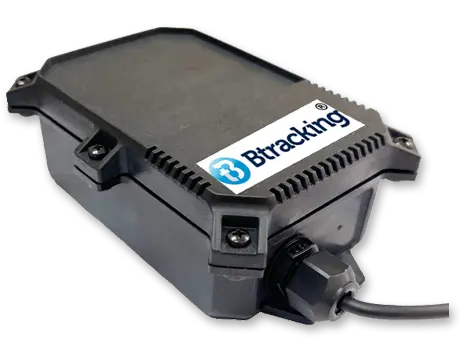
Ultimate Hybrid Battery Powered Tracker
$237.49
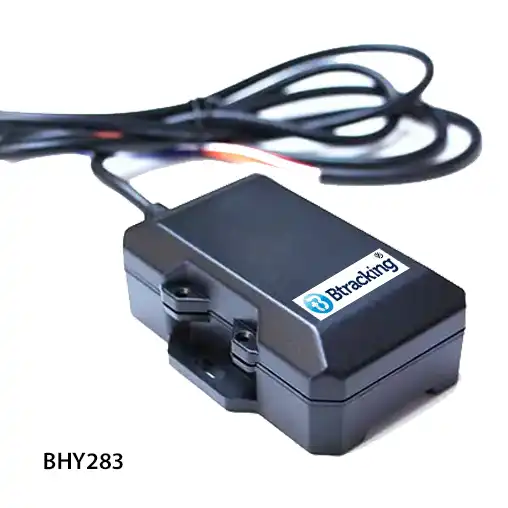
Advanced Hybrid Asset Tracker
$179.99
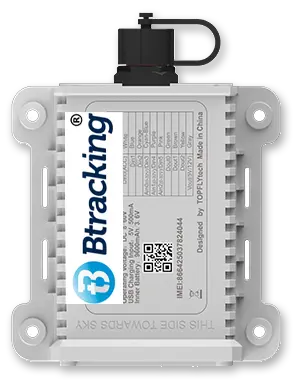
Hybrid Asset Tracker
$139.99
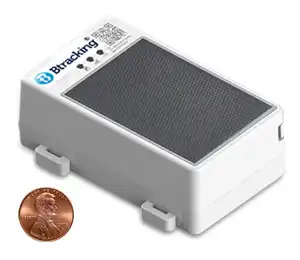
Mini Solar Powered Asset Tracker
$119.99
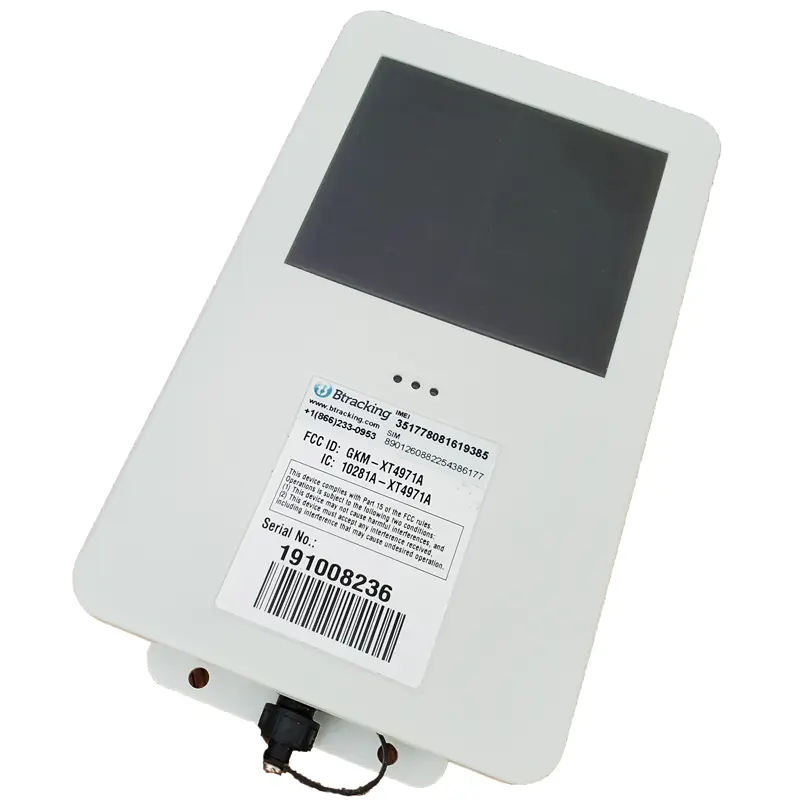
Deluxe Solar/Hybrid Combo Asset Tracker
$289.99
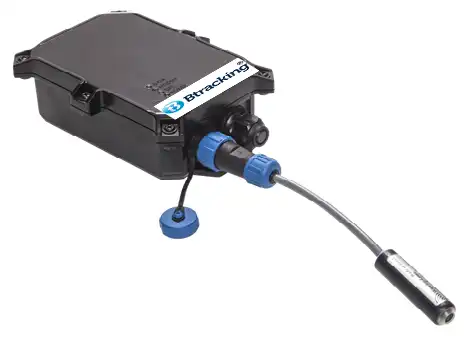
Portable Temperature & Humidity Monitor
$239.99
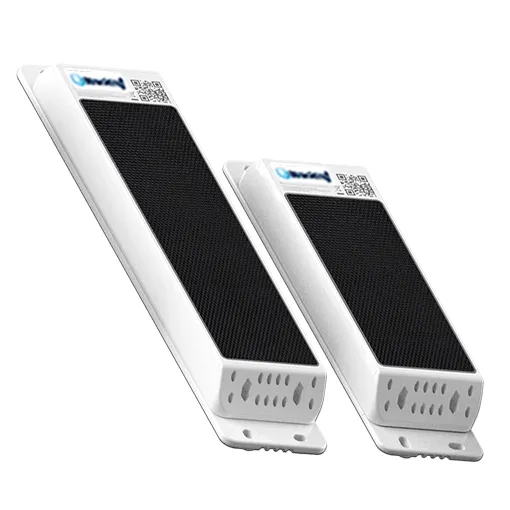
Solar Powered Asset Tracker
$189.99
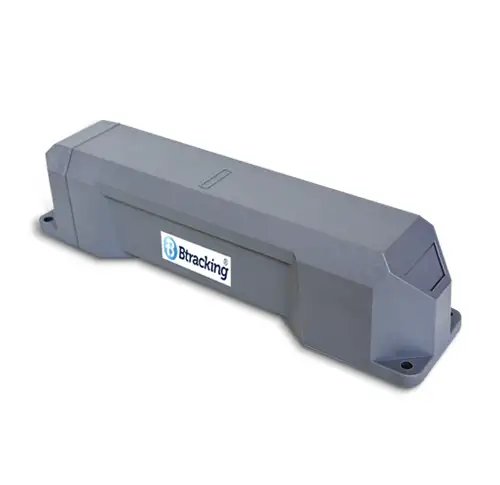
Trailer Asset Tracker
$189.99
Get a written quote
Tell us what you run. An engineer confirms the details and prices it.
Request a quote