
Table of Contents
14 min read
GPS Tracking for Work Trucks: Pickups, Dump Trucks, Trailers and Tools on One Map
Which GPS tracker fits pickups, service trucks and dump trucks, how to track their trailers and tools on one map, and what it costs from $12.95 a month.

What a Work-Truck Fleet Actually Has to Track
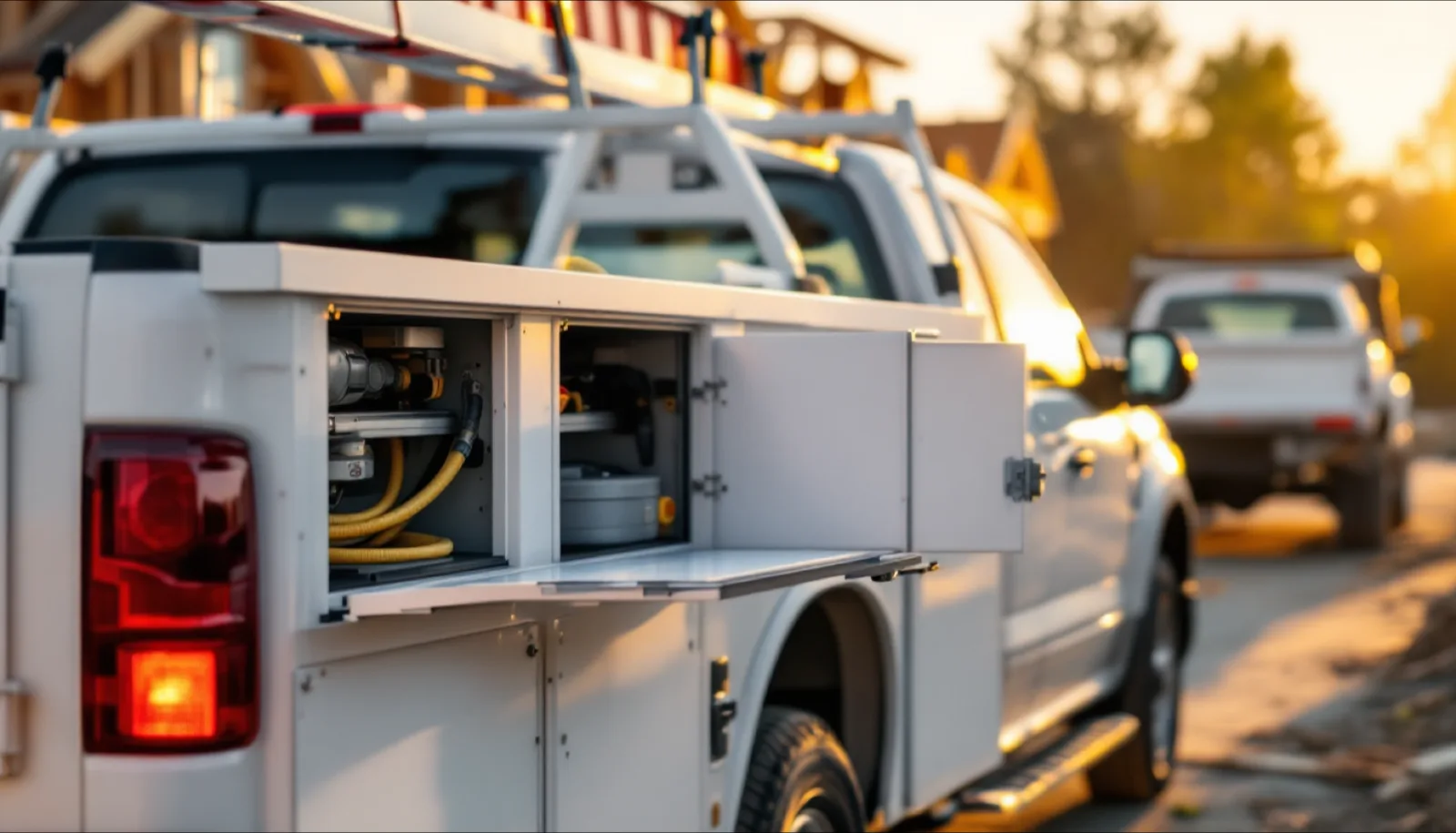
A work-truck fleet presents three distinct tracking layers, and losing visibility at any one of them creates gaps that cost time and money.
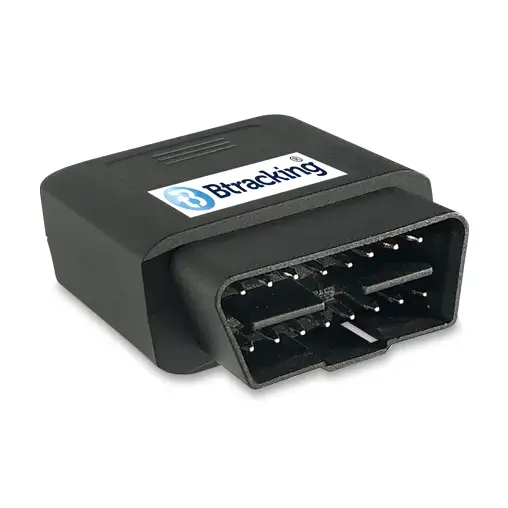
Layer 1, The truck itself. The truck is the organizing unit because it is the only powered asset in the chain. Everything else (trailers, equipment, tools) either rides with it or stays behind when it leaves. A plugin device such as the BP50 Series Plugin Vehicle Tracker reports location every minute, logs stop locations throughout the day, and fires entry and exit alerts at job sites. Optional CANBus data adds odometer readings, fuel level, battery voltage, coolant temperature, RPM, and VIN, the operational signals that tell a manager whether a truck is being driven hard or maintained properly.
Layer 2, Trailers and towed equipment. A trailer has no OBD port, and many trailers have no power source of their own. It may be dropped at a job site for days, swapped between trucks, or left at a yard overnight. The platform tracks trailers as a separate asset class, so a manager can see whether a trailer moved with its assigned truck or stayed behind, and where it is right now.
Layer 3, Tools and small assets. Drills, generators, laptops, and similar equipment are the hardest layer to track because they are small, numerous, and frequently moved by hand. BLE-capable vehicle trackers read BLE tags attached to tools riding inside a truck, associating those tools with that vehicle automatically. AirTracker locations feed the same cloud platform, so every tagged asset appears on a single map from any computer.
Long-haul freight and electronic logging device (ELD) compliance are a separate product category that this guide does not cover. The tracking described here is built for contractor and service fleets, trucks, the trailers they pull, and the tools they carry.
All three layers (vehicles, trailers, and tagged small assets) appear on one platform. The truck is the anchor point that makes the hierarchy legible: when a tool leaves the truck, the platform records that outcome just as clearly as when it arrives.
Which Tracker Goes in Which Truck
Three installation types cover the full range of contractor vehicles. Plug-in OBD-II trackers require no tools, move between trucks in seconds, and suit any fleet where flexibility matters. Hardwired units are permanently concealed behind panels, making them the right choice for owned service-body and box trucks where the device should not be visible or removable. Telematics gateways connect by J1939, OBD-II, or auxiliary power harness and deliver the deepest engine data (fault codes, DEF levels, tire pressures, seatbelt status) for medium and heavy trucks that demand more than a location dot. For a full breakdown of how the three install methods compare, see the OBD vs. Hardwired vs. Battery GPS Tracker guide.
CANBus vehicle data (odometer, fuel level, battery voltage, coolant temperature, RPM, and VIN (vehicle dependent)) is what turns a location ping into usable mileage and engine information. Without it, the platform shows where a truck is; with it, the platform shows how the truck is running.
| Truck Type | Recommended Tracker | Price | What It Reports | Verdict |
|---|---|---|---|---|
| Half-ton and three-quarter-ton pickups | BP50 Series Plugin Vehicle Tracker | $69.99 | GPS, ignition on/off, speed, harsh driving, impact detection; optional CANBus (odometer, fuel level, battery voltage, coolant temp, RPM, VIN, vehicle dependent) | Buy |
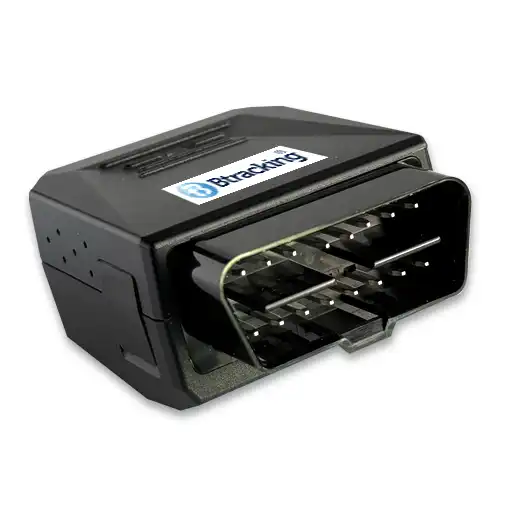
| Pickups and light service trucks needing deep OBD data and developer customization | BP304 Deluxe Plugin Vehicle Tracker | $159.99 | Widest OBD-II data set (DTC codes, DEF, tire pressures, seatbelt, transmission fluid temp, throttle position, and more), BLE, programmable audible warnings, driver ID | Consider, more capability than most pickup fleets require; justified only when custom application development or the full OBD-II data set is a stated requirement |
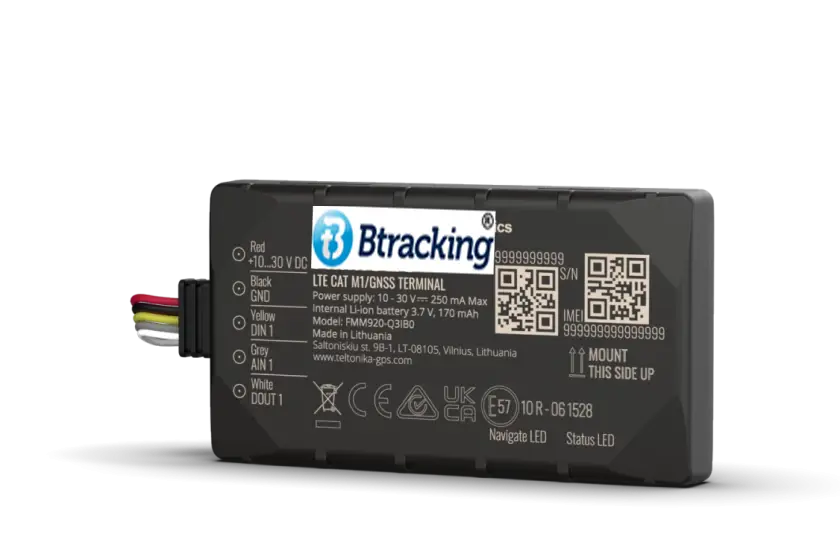
| Owned service-body or box trucks where the unit must stay hidden | BHW920 Compact Hardwired Vehicle Tracker | $59.99 | GPS, ignition on/off, motion and tilt detection; no driver behavior or vehicle health monitoring | Buy, for location-only fleets; not suitable where driver scorecards are required |
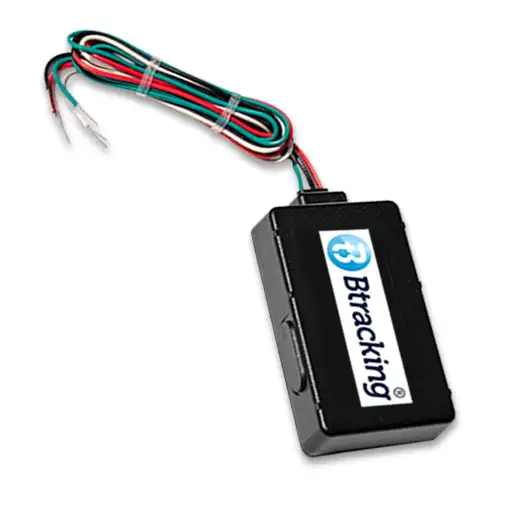
| Owned trucks needing door, lights, or PTO monitoring | BHW123 Hardwired Vehicle Tracker | $95.99 | GPS, ignition on/off, motion and tilt; 2 digital inputs / 3 digital outputs (doors, lights, PTO); no driver behavior or vehicle diagnostics | Buy, for fleets that need I/O wiring; not suitable where driver scorecards are required |
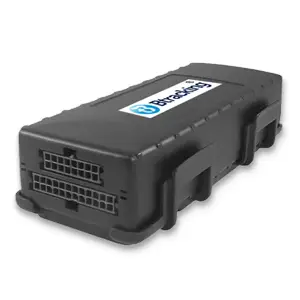
| Dump trucks, larger box trucks, medium and heavy trucks | BT364 Deluxe Truck Tracker | $239.99 + $10–$20 harness | Full engine data: DTC fault codes, DEF levels, seatbelt use, tire pressures, fuel level, odometer, coolant temp, RPM, VIN (vehicle dependent); driver behavior; J1939 and OBD-II supported | Buy |
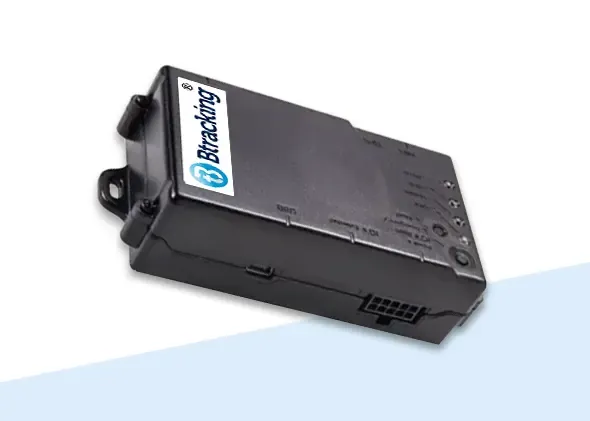
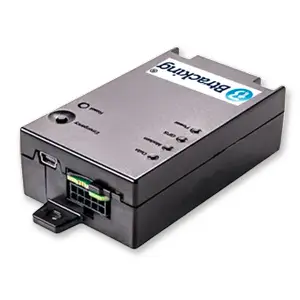
| ProFleet heavy trucks requiring driver ID and starter-kill | BTSTX ($219.99) or BTPLUS ($239.99) ProFleet gateways | $219.99 – $239.99 | Driver behavior, automatic driver ID (RFID card or iButton), starter-kill command, up to 5,000 buffered events; ProFleet platform only | Buy, for operations that require driver ID enforcement or remote starter-kill |
Purchasing vs. the free-device plan. As an alternative to buying hardware outright, Btracking offers a free plug-in or hardwired tracker at $13.95 per month on the Standard platform plus a one-time activation fee ($20 for plug-in without CANBus data, $25 with CANBus). The free tracker may be a used device, remains Btracking property, and ending the subscription requires returning it in working condition, or paying an $85 device buyout fee. Purchased hardware is customer-owned, subscribes at $12.95 per month on Standard, and carries a lifetime warranty for as long as the subscription runs continuously.
Buy, BP50 Series for standard pickups; BHW920 for location-only concealed installs; BHW123 where I/O wiring is needed; BT364 for medium and heavy trucks requiring full engine data.Consider, BP304 only when custom OBD-II development or the full extended data set is a documented requirement.Buy, BTSTX or BTPLUS for ProFleet operations requiring driver ID and starter-kill.
What a Fleet Manager Does with It on an Ordinary Day
A fleet manager running a contractor operation uses the Btracking platform for four distinct tasks before lunch.
Closest-truck dispatch. When an urgent call comes in, the live map shows every vehicle's current position. If one truck is running late on its current job, the manager reassigns the call to the nearest available vehicle rather than pressuring the late driver to rush. A plumbing contractor with about 40 service vehicles used exactly this workflow after putting a GPS tracker in every vehicle, the whole fleet was visible in real time, and late-running jobs were redirected rather than rushed.
Job-site arrival and departure records. Geofence entry and exit alerts generate timestamped notices each time a vehicle crosses a boundary drawn around a customer address or job site. The day's full stop list (every location, sequence, and duration) is available after the shift without any driver input. That record feeds billing, payroll, and customer disputes without a phone call.
After-hours movement. The platform's Unauthorized Use alert fires a text message whenever a vehicle moves outside its assigned work schedule. The plumbing contractor's operations manager configured a work schedule for each group of vehicles and received an alert the moment any truck moved outside those hours, giving the business a passive check on personal use without active monitoring.
Maintenance data from the vehicle itself. The BP50 Series Plugin Vehicle Tracker reads optional CANBus data (odometer, fuel level, battery voltage, coolant temperature, and RPM) directly from the vehicle's bus. Those figures feed maintenance records automatically, removing the need to manually log mileage at the end of a shift.
Driver behavior ran through all four tasks at the plumbing contractor. Scorecards ranked each driver on speeding and harsh driving over time, and the operations manager described the result plainly:
"…has really cut down on speeding and aggressive driving. Drivers are competing to be acknowledged as a top scoring driver, and it's made a real difference in reducing the wear and tear on our vehicles."
Tracking the Trailer: Powered, Unpowered and Not Worth the Bother
A trailer that never leaves its truck is already covered by the truck's own tracker, a second device adds cost without adding visibility. The calculus changes the moment a trailer is dropped at a job site, swapped between trucks, or left at a yard overnight. At that point, the trailer needs its own GPS unit, and the right choice depends entirely on whether it has a power connection.
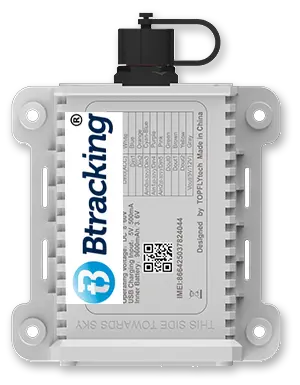
For a trailer wired to tow-vehicle power, the BHY212B Hybrid Asset Tracker at $139.99 is the correct fit. It draws power from the truck while connected, recharging its internal 9,600 mAh battery in the process, and it fires coupling and decoupling alerts with exact location whenever the trailer is disconnected from or reconnected to that power source, which is precisely the moment a dropped trailer becomes a theft or loss risk. When the trailer is sitting off power, the battery sustains reporting for up to approximately 12 months at five reports per day. The unit is IP66 sealed, mounts by magnet, screw, or adhesive, and includes BLE 5.0 support for wireless sensors such as temperature and door-open/close monitoring.
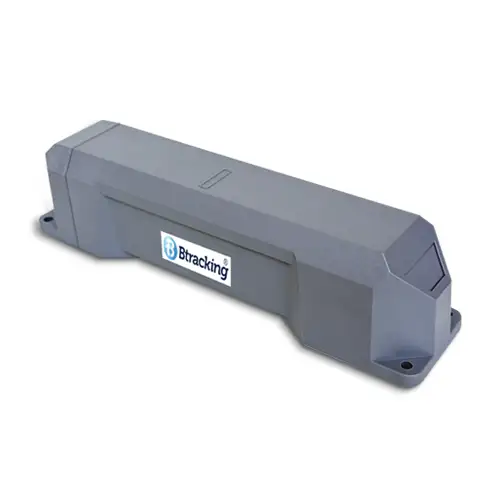
For a trailer with no wiring at all, the BB502 Trailer Asset Tracker at $189.99 removes the power dependency entirely. Its internal 57,000 mAh lithium thionyl chloride battery is rated for up to 10 years and up to 16,000 messages on a single pack, and when that pack is eventually exhausted, it is field-replaceable without returning the unit. A built-in motion sensor causes the device to report more frequently when the trailer is moving, conserving capacity during idle periods. The weatherproof enclosure is rated IP68. For operators who want to avoid wiring on trailers but are also evaluating solar-assisted options, the solar GPS asset tracker overview covers that approach in detail.
Buy, BHY212B Hybrid Asset Tracker for any trailer with a power harness connection to the tow vehicle.
Buy, BB502 Trailer Asset Tracker for any trailer with no power source and a need for a decade of maintenance-free operation.
Skip, either device for a trailer permanently coupled to a single dedicated truck; the truck tracker already covers it.
Tracking the Tools: BLE Beacon Tags and the Mini AirTracker
Two distinct methods cover tool tracking, and choosing the wrong one for a job site creates blind spots, so the operating principle of each matters before the purchase.
Method 1, EYE Beacon BLE Tag ($27.99)
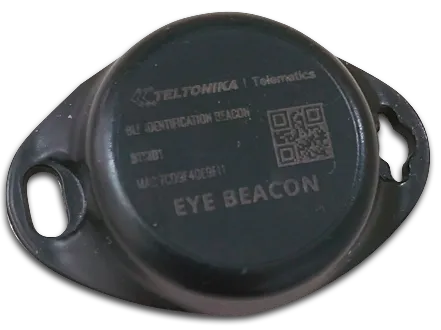
The EYE Beacon BLE Tag is a proximity device, not an independent locator. It attaches to a tool and broadcasts a short-range Bluetooth signal; a BLE-enabled GPS tracker installed in the truck reads that signal within approximately 50 feet and records that the tool is present with that vehicle. The platform then reports the truck's GPS position, not the tool's independent position. If the tool is removed from the truck and left on site, the association simply drops; there is no further location update for the tool itself.
Battery is a sealed, non-replaceable Li-Ion cell rated approximately three years. At $27.99 per tag, the unit cost is low enough to equip an entire tool inventory, provided the fleet already runs BLE-capable vehicle trackers to act as readers.
Buy, the right choice for any fleet that already has BLE-enabled vehicle trackers and needs to confirm, at the end of each day, that every high-value tool left the site inside the correct truck.
Method 2, Mini AirTracker ($9.99)
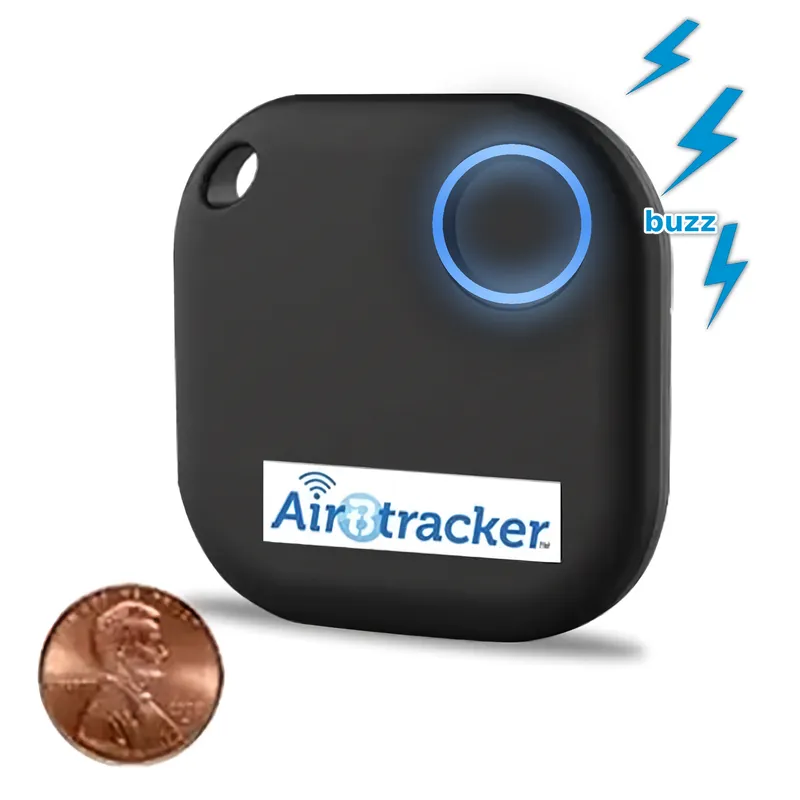
The Mini AirTracker operates on a different principle entirely. It carries no cellular modem and no GPS chip; instead, it reports its position through a Crowd-GPS network of passing smartphones. That means location updates depend on network density, accuracy runs within 200 to 300 feet, and update frequency is determined by the annual ProFleet subscription tier:
- $45.99/year, locations refreshed every 60 minutes
- $51.99/year, locations refreshed every 30 minutes
- $59.99/year, locations refreshed every 10 minutes
All three tiers renew annually; cancellation must be submitted at least 10 business days before the renewal date.
At 5.6 mm thick, the tag fits inside tool cases, under equipment lids, or tucked into gear lining. It runs on a standard CR2032 coin cell rated up to approximately 24 months and swappable in seconds, with no proprietary charger. The optional Easy Locate feature lets a manager tap a bell icon in the app to make a nearby AirTracker beep and flash, which is useful for locating a tool within a yard or staging area.
Because location updates depend on smartphones passing within range, the AirTracker is weakest on remote or low-traffic sites where crowd density is thin. For a full comparison of business-grade tag options, see the best business AirTag alternatives guide.
Both the EYE Beacon BLE Tag and the Mini AirTracker report into the same Btracking platform, so vehicle positions, trailer locations, and tool assignments appear on a single map from any computer.
Consider, the right choice when tools move between multiple sites or are stored away from the fleet's vehicles, but only where 200–300 foot accuracy is acceptable; on remote or low-traffic sites with sparse smartphone traffic, location updates may be infrequent or absent.
Trucks, Trailers and Tools on One Map
A contractor operation running Btracking sees its trucks, the trailers they pull, and the tools they carry on a single map, from the same screen used to dispatch. BLE-capable vehicle trackers read BLE tags attached to equipment riding in or on a vehicle, so the office can answer "which truck has the core drill" without a phone call. AirTracker locations feed the same cloud platform, so generators, drills, and laptops tracked independently appear alongside every vehicle on that map.
That single view also serves the dispatch function: the same platform that shows asset locations handles scheduling, so "where is the dump trailer" and "where should I send it next" are answered from one screen.
AirTrackers run exclusively on the ProFleet platform. A fleet that wants AirTrackers on the same map as its trucks should confirm the correct platform tier when requesting a quote.
No separate portal, no manual cross-referencing between systems, one login covers the full inventory of vehicles, trailers, and tools.
The Cost Model: Buying a Tracker vs. the Free-Device Plan
Two acquisition paths exist: purchase the hardware outright, or take a free device and subscribe at a slightly higher monthly rate.
Path 1, Purchase and subscribe. When the hardware is bought outright, the platform subscription runs at $12.95/month on Standard, month-to-month after the initial term, cancellable with 10 business days' notice. The hardware is the customer's property from day one, carries no return obligation, and is covered by a lifetime warranty for as long as the subscription runs continuously.
Path 2, Free-device plan. Btracking provides a plug-in or hardwired tracker at no upfront equipment cost. The trade-off is a higher monthly rate, $13.95/month on Standard, plus a one-time activation fee of $20 (hardwired or plug-in without CANBus) or $25 (plug-in with CANBus). That $1.00/month premium is modest in isolation, but it compounds across a multi-truck fleet over several years. More consequentially, the free device remains Btracking property. Ending or pausing the subscription requires returning it in proper working condition; if the device cannot be returned in that state, a $85 buyout fee applies. The device supplied may also be a used unit.
The practical implication is straightforward: a truck the business owns and intends to run for several years is better served by purchased hardware, lower monthly cost, no return obligation, and a lifetime warranty that holds while the subscription runs continuously. A leased truck, a short-tenure vehicle, or a seasonal unit is a reasonable candidate for the free-device plan, where avoiding upfront hardware spend outweighs the higher recurring rate and the return requirement.
AirTrackers operate on a different model entirely, an annual ProFleet subscription rather than a monthly one. The interval-based annual prices are listed in the tool-tracking section above.
For a full breakdown of what GPS tracking actually costs across both paths, see the Btracking cost guide.
Verdict per path:
Buy (purchased hardware), the right choice for any truck the business will operate continuously; lower monthly rate, no return liability, and lifetime warranty coverage.
Consider (free-device plan), appropriate only for leased vehicles or short-tenure trucks where avoiding hardware spend at acquisition outweighs the $1.00/month premium and the return obligation at end of service.
The next decision is a counting exercise: list the trucks by type, plug-in eligible versus hardwired, then count the trailers and non-powered assets, then determine which of those assets justify a tag. That inventory drives every hardware and subscription choice that follows.
Frequently asked questions
What GPS tracker is best for a pickup truck fleet?
The BP50 Series plug-in tracker ($69.99) installs without tools, hides in seconds with an optional Y-cable, and moves with the truck when it is sold or swapped. Adding the CANBus vehicle data option gives odometer, fuel level, coolant temperature, RPM and VIN, turning a location dot into a maintenance data source.
What GPS tracker works on a dump truck or heavy service truck?
The BT364 Deluxe Truck Tracker ($239.99) connects via a J1939 (+$20) or OBD-II (+$10) harness and reads engine fault codes, DEF levels, tire pressures, seatbelt use and full telematics data, vehicle dependent. The BTSTX ($219.99) and BTPLUS ($239.99) ProFleet gateways add automatic driver ID and a starter-kill command on the ProFleet platform.
How do I track a trailer that has no power connection?
The BB502 Trailer Asset Tracker ($189.99) runs on a field-replaceable battery rated up to 10 years and up to 16,000 messages, reporting more frequently when the trailer moves. For a trailer wired to the truck, the BHY212B Hybrid Asset Tracker ($139.99) sends coupling and decoupling alerts with exact location and recharges its 9600 mAh battery from the tow vehicle.
Can I track tools and small equipment on the same platform as my trucks?
Yes. An EYE Beacon BLE Tag ($27.99) attached to a tool is read by a BLE-enabled tracker in the truck at roughly 50 feet, confirming the tool is with that truck. The Mini AirTracker ($9.99) reports through a Crowd-GPS network with accuracy within 200 to 300 feet on an annual ProFleet subscription; both appear on the same Btracking platform as the trucks.
What is the difference between the free GPS tracker plan and buying a tracker outright?
The free-device plan costs $13.95/month on Standard plus a one-time activation fee, but the tracker remains Btracking property and must be returned in working order or bought out for $85 to end the subscription. Buying a tracker outright means the customer owns it and subscribes at $12.95/month on Standard with no return obligation; the free-device plan suits leased or short-tenure trucks better than trucks the business will keep for years.
Products in this guide
BP50 Series Plugin Vehicle Tracker
$69.99
BHW920 Compact Hardwired Vehicle Tracker
$59.99
BT364 Deluxe Truck Tracker
$239.99
BP304 Deluxe Plugin Vehicle Tracker
$159.99
BHW123 Hardwired Vehicle Tracker
$95.99
BTPLUS ProFleet Truck Tracker
$239.99
BTSTX ProFleet Truck Tracker
$219.99
BB502 Trailer Asset Tracker
$189.99
BHY212B Hybrid Asset Tracker
$139.99
EYE Beacon BLE Tag
$27.99
AirTracker
$9.99
Get a written quote
Tell us what you run. An engineer confirms the details and prices it.
Request a quote