What Makes a Business-Grade AirTag Alternative Different?
Btracking AirTrackers are Crowd-GPS Bluetooth tags — they carry no SIM card and no cellular radio, and a location is produced only when a smartphone on the Crowd-GPS network passes near the tag. That’s the honest starting point, and it’s worth stating plainly: if no phone passes by, a scheduled check returns no location. What these tags trade in raw connectivity they make up for in cost and operational fit — the ongoing expense is a low annual platform subscription rather than a per-device cellular data plan.
Four things separate them from a consumer tag like Apple AirTag:
1. Not locked to one phone ecosystem. Apple’s Find My network draws only from Apple devices. The Crowd-GPS network Btracking uses is not restricted to a single phone manufacturer’s ecosystem, so the pool of handsets that can report a tag’s position is broader than one brand’s installed base.
2. No tag cap. Consumer tags cap how many items one account can hold; Apple’s Find My limit is 32. A Btracking account has no cap on the number of AirTracker tags it can hold — a fleet with hundreds of tools or trailers can add tags without hitting an arbitrary ceiling.
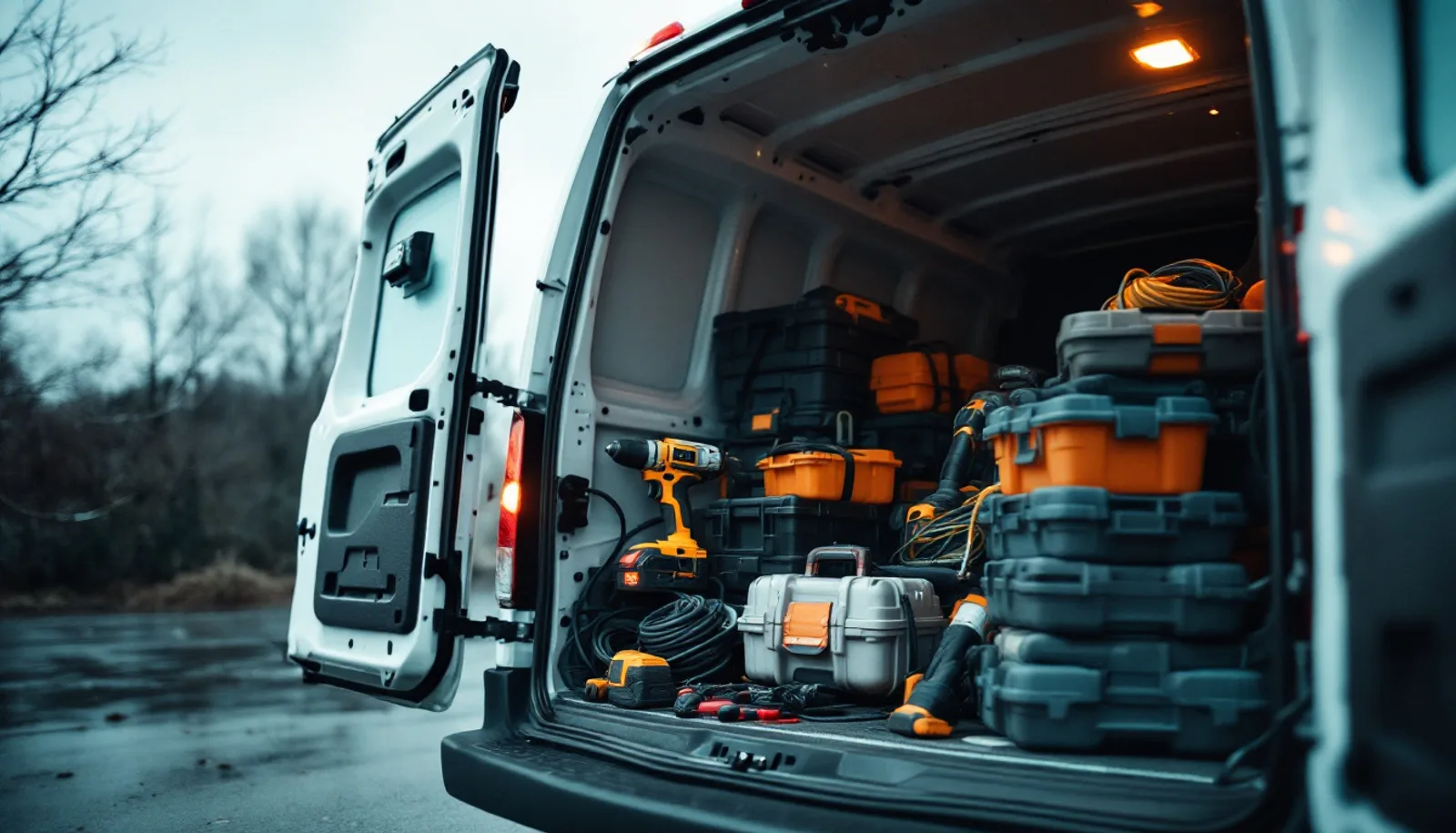
3. One map for everything. AirTracker locations feed directly into the ProFleet platform alongside tracked vehicles, trailers, containers, and heavy equipment. Operations managers see tagged tools and assets on the same map, with location history and reports — not a separate phone app showing a single tag’s last known position.
4. Unlimited user logins. Consumer tags are managed from one person’s handset. A Btracking account places no cap on user logins, so dispatchers, supervisors, and field managers can all have access simultaneously.
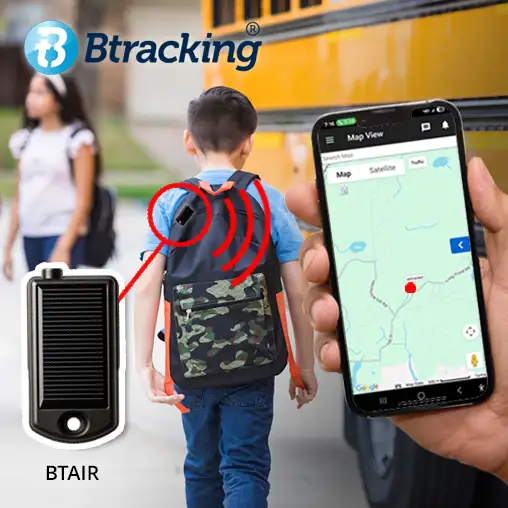
Two hardware options cover different maintenance preferences. The Solar AirTracker (BTAIR) harvests indoor and outdoor light to recharge indefinitely, eliminating battery swaps — practical for tags attached to equipment that rarely comes back to a depot. The Mini AirTracker runs on a standard replaceable CR2032 and adds an optional “Easy Locate” mode that makes the tag beep and flash when triggered from the app — useful when you know an asset is nearby but need to pinpoint it on a crowded job site.
The platform checks for new location pings every 60, 30, or 10 minutes depending on your subscription plan. Some checks return a fresh location; some return none if no smartphones passed near the tag in that window. Plan your use cases around that cadence.
The Decision You Must Make First: Do Phones Regularly Pass This Asset?

The single most important question before you buy any Btracking tag is whether smartphones regularly pass within range of the asset — because the answer determines which technology class actually works for your situation.
Crowd-GPS AirTrackers (starting at $9.99 for the Mini AirTracker) carry no SIM and no cellular radio. A location is produced when another smartphone on the Crowd-GPS network passes near the tag. On a staffed jobsite, a busy city block, a retail shop floor, or an urban bike rack, phones pass constantly, so scheduled checks are far more likely to return a fresh location — and you pay no cellular data fee, just the $45.99/year platform subscription. That is the environment these tags are built for.
Cellular asset trackers — the BB300, BB502, BS110, and BB100Q — carry a 4G LTE CAT M1 cellular radio and internal GPS/GNSS antennas. They acquire and transmit their own location on a set schedule with no passing phone involved. A remote yard, an unstaffed equipment lot, a rural field, or an unmonitored trailer drop — these are their environments.
If foot traffic near the asset is rare, a Crowd-GPS AirTracker will return no location — not because it is broken, but because that is exactly how the technology works. Use a cellular tracker for any asset that sits where phones don’t pass.
Decision Tree
- an AirTracker, from $9.99, no cellular feeYes, reliably — staffed jobsite, shop, urban area
- a cellular tracker: BB300, BB502, BS110 or BB100QNo, or rarely — remote yard, rural field, unstaffed lot
- assume sparse foot traffic and default to cellularUnsure
The cellular units carry 4G LTE CAT M1 and internal GPS/GNSS, so they report on their own schedule with no passing phone required. That is the whole fork: on a remote asset the cost of a missed location outweighs the difference in device price.
The Btracking AirTracker Line-Up: Which Tag Fits Your Use Case?
Both AirTracker models run on Crowd-GPS — no SIM, no cellular data plan — so the right choice comes down to battery access and operating environment.
When a smartphone on the Crowd-GPS network passes near a tag, it produces a location ping. The platform then checks for new pings on a scheduled interval: every 60, 30, or 10 minutes depending on your subscription plan. Some checks return a fresh location; some return none if no phones passed nearby in that window. Because there is no cellular fee, the ongoing cost is an annual platform subscription rather than a per-device data line.
The Mini AirTracker at $9.99 makes sense when you need to tag a high volume of items and can manage occasional battery swaps. The Solar AirTracker (BTAIR) at $54.99 is the practical choice when retrieval for maintenance is inconvenient — the solar cell removes the swap cycle entirely.
When You Need More Than a Tag: Cellular Asset Trackers for Remote & Unstaffed Assets
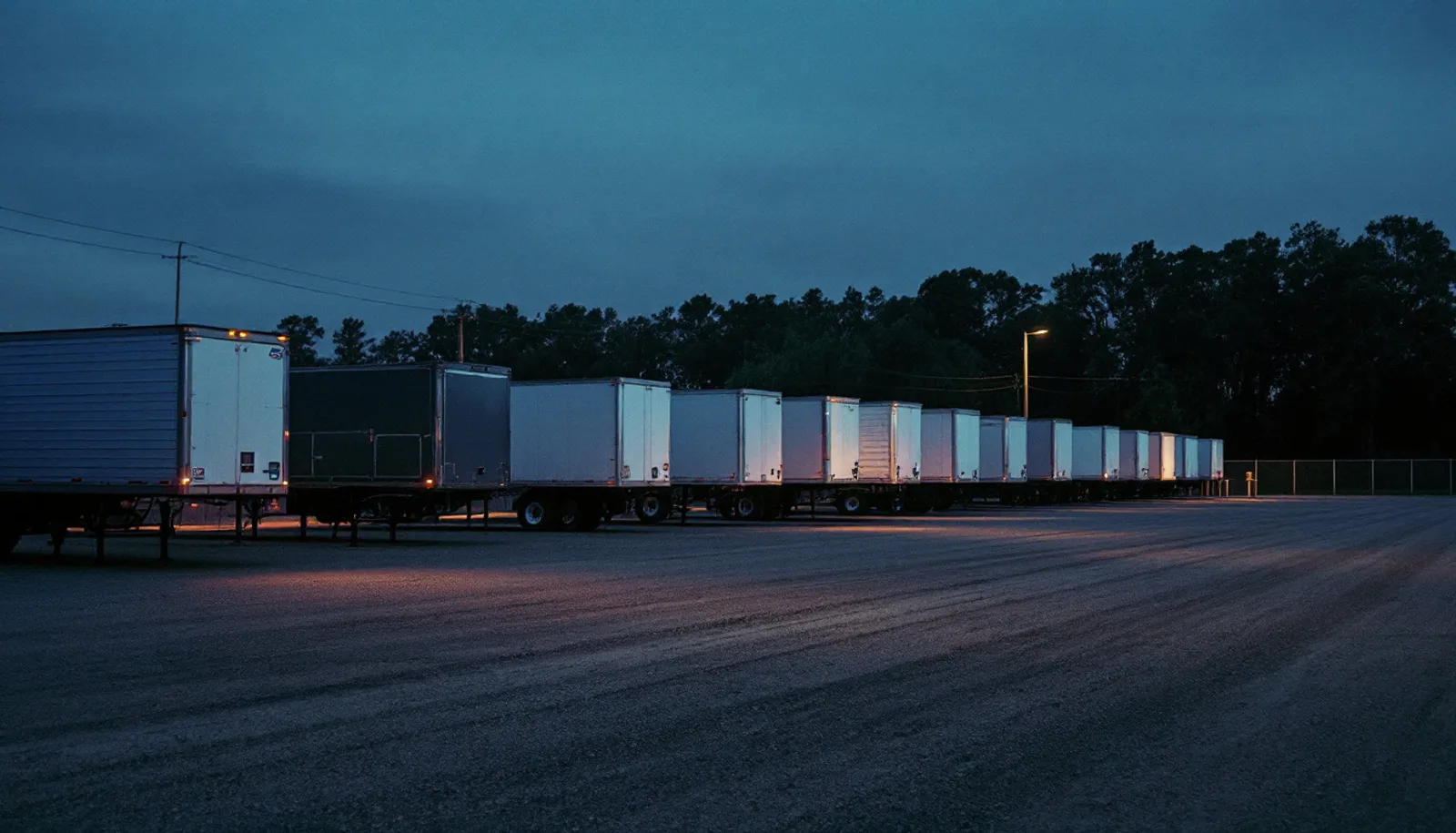
Bluetooth tags depend on other people’s phones — cellular asset trackers do not. When an asset sits in a remote yard, an unstaffed job site, or a storage lot with no foot traffic, it needs its own radio. Btracking’s BB300, BB502, BS110, and BB100Q each carry a 4G LTE CAT M1 cellular radio and internal GPS/GNSS antennas, so they acquire and transmit their own position on a schedule regardless of who is nearby.
Four SKUs cover the range of mounting situations, battery strategies, and asset types:
BB300 Mini Asset Tracker — $99.99 A small-footprint tracker with a built-in magnet and a replaceable battery. Multi-location technology makes it versatile across trailers, autos, containers, small machines, tools, and pallets — anywhere a quick magnetic attachment is enough.
BB502 Trailer Asset Tracker — $189.99 Built specifically for trailers and non-powered equipment where you want to set it and forget it. The battery lasts up to 10 years and is field-replaceable, so a technician can swap it on-site without pulling the unit. An optional magnet mount kit with steel lanyard is available for installations where a more secure attachment matters. Note: this unit ships ground-only.
BS110 Mini Solar Powered Asset Tracker — $119.99 The right choice for outdoor assets with regular sun exposure. With about four hours of average daily sunlight it stays fully charged under almost any typical reporting frequency, and it holds a substantial reserve on a single charge if the sun disappears for a stretch. The solar panel handles recharging, so battery replacement is not part of the maintenance equation.
BB100Q Micro Multipurpose Tracker — $89.99 At 2.5 × 2 × 0.8 inches, this is the smallest of the four cellular trackers and the lowest entry price. It mounts with an included adhesive strip and is rated as carrying the industry’s most powerful long-life battery for its class. Useful anywhere a discreet, low-profile installation matters.
If an asset moves between covered and outdoor environments unpredictably, a replaceable-battery model (BB300, BB502, or BB100Q) gives you a known energy budget. The BS110’s solar recharge is a strong fit only when consistent outdoor sun exposure is a reasonable assumption.
All four models operate independently of any smartphone network — the cellular radio handles the uplink directly. That is the practical dividing line between a tag and a tracker, and it is what makes this tier the right call for assets that spend long periods unattended.
Full Product Comparison: AirTrackers vs. Cellular Asset Trackers
The six Btracking devices split cleanly into two classes — Crowd-GPS AirTrackers that rely on nearby smartphones to report a location, and cellular asset trackers that carry their own 4G LTE CAT M1 radio and GPS/GNSS antennas to self-report from anywhere with cell coverage.
A note on alerts. Geofence and movement alerts are platform capabilities, not device-specific features. For an AirTracker, an alert can only fire from a location the platform actually received — meaning it depends on the scheduled check interval (every 60, 30, or 10 minutes depending on plan) and a smartphone having passed nearby. A cellular tracker with a motion sensor reports movement on its own, independent of foot traffic.
A Btracking account places no limit on the number of AirTracker tags or user logins. Consumer tags impose per-account item limits and tie management to a single handset — neither constraint applies here, making the platform practical for operations teams of any size.
How Btracking AirTrackers Compare to Apple AirTag, Tile, and Samsung SmartTag for Business
Btracking AirTrackers are built for fleet and operations use cases that consumer tags were never designed to handle — the differences matter most at scale and when you need assets to appear on the same map as your vehicles.
Ecosystem lock-in
Apple Find My is tied to Apple devices and Samsung SmartThings Find is tied to Samsung devices. Btracking’s Crowd-GPS network is not restricted to any single phone manufacturer’s ecosystem, which means the pool of handsets that can report a tag’s location is drawn from a broader mix of devices rather than one brand’s installed base.
AirTrackers carry no SIM and no cellular connection — a location is produced when any smartphone on the network passes near the tag. Because there is no cellular data plan, the ongoing cost is a low annual platform subscription instead of a per-device cellular fee.
Scale: no cap on tags or users
Consumer tags cap how many items an account can hold — Apple’s Find My limit is 32. They are also managed from one person’s handset, which creates an obvious problem the moment a second manager needs visibility.
A Btracking account has no cap on the number of AirTracker tags and no cap on user logins. For a fleet team tracking tools, trailers, generators, and job-site equipment across multiple managers, that removes a hard ceiling that consumer products simply weren’t built to clear.
Platform integration: one map for everything
Consumer tags show a single tag’s last known location in a phone app. Btracking AirTrackers feed the same ProFleet platform as tracked vehicles, vans, trailers, containers, and heavy equipment — so tagged tools and loose assets appear on one map alongside the rest of your fleet, with location history and reports available to every authorized user.
That matters operationally: you’re not switching between a fleet dashboard and a phone app to find out where a generator is.
Solar option for low-maintenance deployments
The AirTracker | Solar Rechargeable Battery is priced at $54.99 and recharges from ambient light, eliminating battery-swap intervals on assets that are difficult to access regularly. The coin-cell model uses a standard replaceable CR2032 and is available at $9.99 — a straightforward entry point for high-volume tagging of tools and equipment.
Summary comparison
Tile is left out of this table on purpose: we have no published figure for it on either row, and a column of dashes is not a comparison.
The rest of what separates a professional tag from a consumer one is not a spec on the tag at all — it is the account it reports into:
- Multi-user dashboard — ProFleet places no cap on user logins, so the whole team
sees the same map from any device rather than one person’s handset.
- One map for everything — tags sit alongside the vehicles, trailers and equipment
the fleet already tracks, with location history and reports.
- Two hardware options — a solar-rechargeable tag at $54.99 that never needs a
battery swap, and a CR2032 coin-cell tag at $9.99.
Frequently asked questions
Does a Btracking AirTracker work without a smartphone nearby?
No. AirTrackers are Crowd-GPS Bluetooth tags with no SIM and no cellular radio. A location is produced only when a smartphone on the Crowd-GPS network passes near the tag and the platform’s scheduled check (every 60, 30, or 10 minutes depending on plan) picks it up. If no phone passes the tag between checks, no new location is recorded. For assets in remote or unstaffed locations, Btracking’s cellular trackers (BB300, BB502, BS110, BB100Q) are the correct choice.
How many AirTracker tags can one Btracking account hold?
Btracking imposes no cap on the number of AirTracker tags in an account and no cap on the number of user logins, so a whole operations team can see the same map. Consumer tags cap the number of items an account can hold — Apple’s Find My limit is 32.
What is the cheapest professional Bluetooth asset tag for tracking tools and equipment?
The Btracking Mini AirTracker is priced at $9.99 and uses a standard replaceable CR2032 battery. It operates on a Crowd-GPS network and is suited for tools, bikes, backpacks, and equipment in areas where smartphones regularly pass by. The ongoing cost is a low annual platform subscription rather than a cellular data fee.
Can I track a trailer parked in a remote yard with a Bluetooth asset tag?
A Crowd-GPS Bluetooth tag is not the right tool for a remote or unstaffed location where smartphones rarely pass. For a trailer in a remote yard, Btracking’s cellular trackers — such as the BB502 ($189.99, up to 10-year battery) or BB300 ($99.99, built-in magnet) — carry 4G LTE CAT M1 and internal GPS/GNSS and report their own location on a schedule with no passing phone required.
Do geofence alerts work with Btracking AirTracker Bluetooth tags?
Geofence and movement alerts are a platform capability, but for a Crowd-GPS AirTracker an alert can only fire from a location the platform actually received — meaning it depends on a smartphone having been nearby and follows the scheduled check interval (every 60, 30, or 10 minutes by plan). For reliable movement alerts on unstaffed assets, a cellular tracker with a motion sensor is more appropriate because it reports on its own schedule.
Published with xpay