
Table of Contents
14 min read
Trailer GPS Trackers Without Power: How Unhitched Trailers Report
A trailer GPS tracker carries its own GPS receiver, cellular radio and power source so it reports position without any connection to the tow vehicle…

What a trailer GPS tracker is
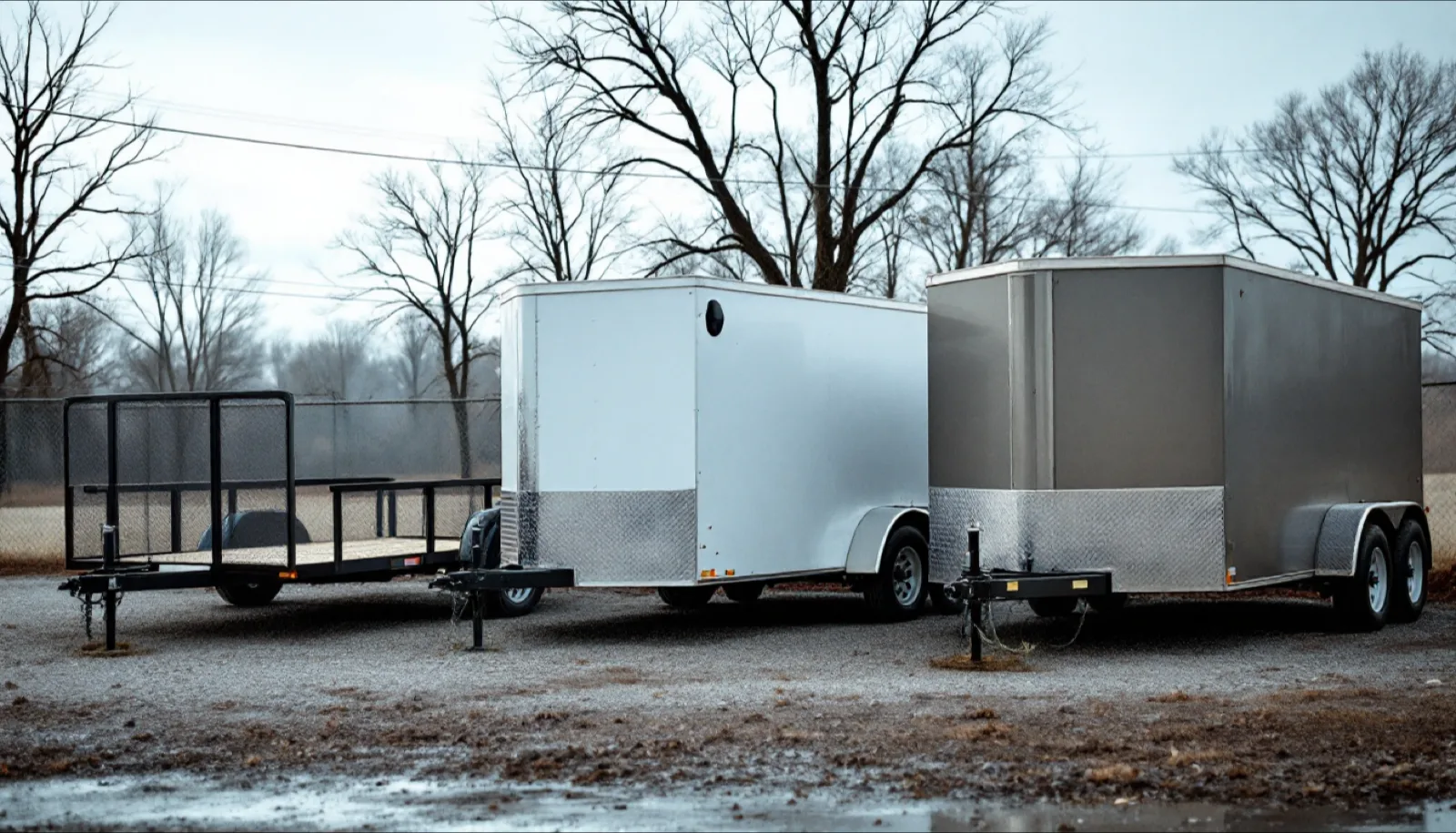
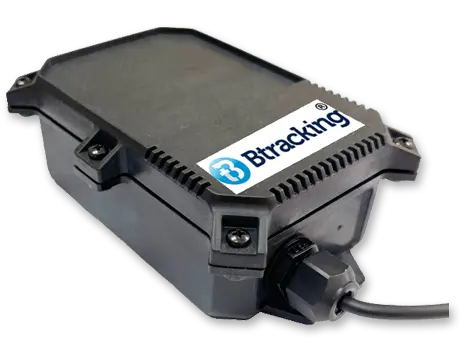
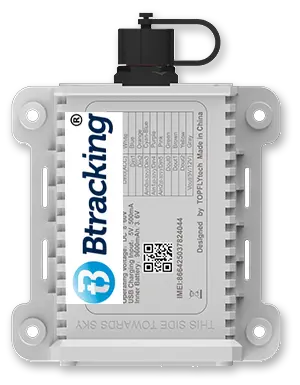
A trailer GPS tracker is a self-contained device with its own GPS receiver and cellular radio that determines the trailer's position and transmits it to a mapping platform at configurable intervals. The core engineering problem is power: a trailer carries no ignition circuit and is typically disconnected from any power feed when parked, which means the power source governs how often the device can report, how long it will operate between service events, and where on the trailer it can be mounted. The four practical approaches to solving that problem are a self-contained long-life battery (such as the BB502 Trailer Asset Tracker, which draws from a 57,000 mAh lithium thionyl chloride cell rated for up to ten years and up to 16,000 messages), a hybrid unit wired to the trailer's own power feed that recharges an internal battery while connected and falls back to battery when disconnected (as with the BHY212B Hybrid Asset Tracker), a solar-charged tracker that harvests daylight to sustain reporting on non-powered trailers that sit idle or move occasionally, and a tracker mounted on the tow vehicle itself, which reports the truck's position rather than the trailer's independent location.
A device installed on the towing vehicle reports the truck's position. Once the trailer is dropped and the truck departs, the trailer's location is no longer tracked unless the trailer carries its own device.
Four ways an unhitched trailer reports
An unhitched trailer has no tow vehicle to borrow a signal from, so the tracking approach must match how the trailer is powered, where it parks, and how often it moves.
Self-contained battery tracker
A battery tracker mounts directly to the trailer frame and needs no external power. Motion detection is the key operating principle: each unit wakes when the trailer moves, increases its report rate while in transit, and returns to a slower parked schedule when still, conserving battery for the long haul.
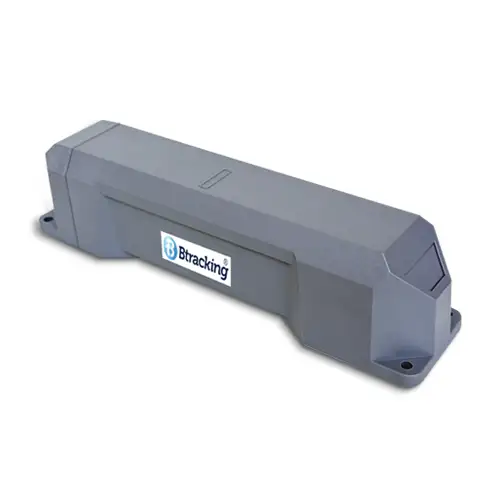
The BB502 Trailer Asset Tracker ($189.99) is the purpose-built option for heavy trailers and non-powered equipment. Its field-replaceable 57,000 mAh lithium thionyl chloride pack is rated for up to 10 years and up to 16,000 messages. At 25 oz and 9.7 × 2.3 × 2.4 inches with an IP68 enclosure, it is built for outdoor exposure; an optional magnet mount kit is available for $14.99.
Smaller trailers or installations where size and concealment matter have three options:
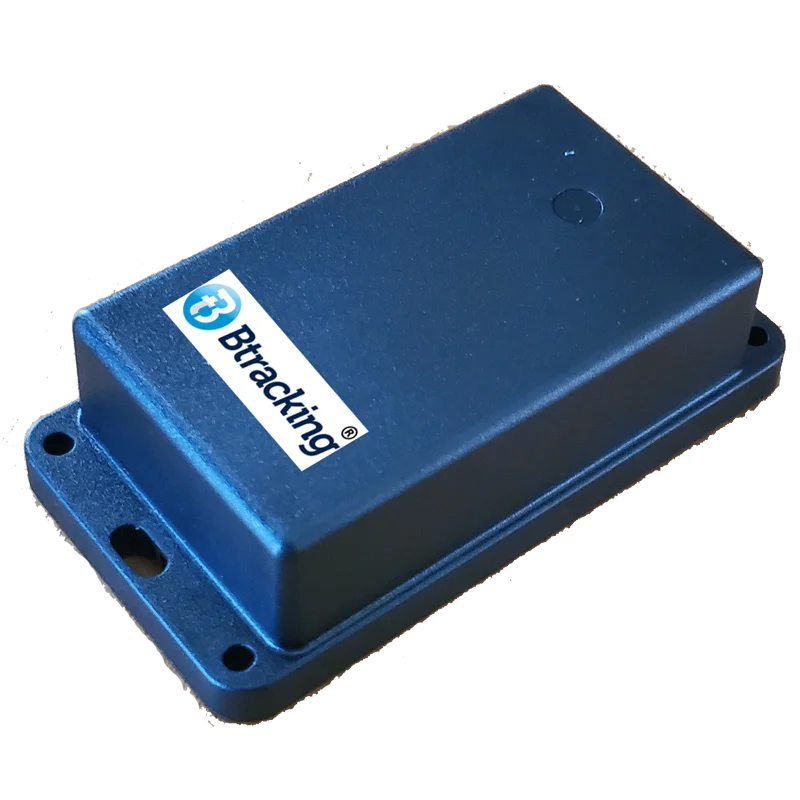
- The BB300 Mini Asset Tracker ($99.99) weighs 7 oz, carries a built-in magnet plus bolt holes, has an IPX7 waterproof enclosure, and its replaceable battery lasts up to 3 years at 1 report per day.
- The BB200T Mini Multipurpose Tracker ($89.99) mounts with a magnet mount kit or adhesive and is rated up to 3 years at 1 GNSS report per day.
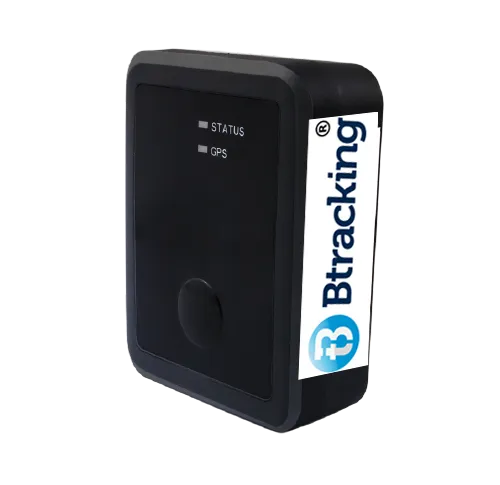
- The BB100Q Micro Multipurpose Tracker ($89.99) measures just 2.5 × 2 × 0.8 inches, mounts with an included adhesive strip, and carries an IP67 enclosure, suited to covert installations where a larger unit would be visible.
All battery-powered units operate on scheduled or motion-triggered reporting intervals to preserve battery life. None should be specified as a real-time tracker for applications that require continuous, sub-minute location updates.
Hybrid wired to the trailer's own power feed
On trailers wired with a 7-pin connector, one pin carries +12 V from the tow vehicle via its ignition, so that feed is live only while the trailer is hitched and the truck is running. A hybrid tracker wired into that feed reports frequently and recharges its internal battery on the road; when the trailer is dropped and the power feed goes dead, the unit falls back to a battery-powered schedule and continues reporting for months. Coupling and decoupling alerts with exact location are sent each time the trailer is connected to or disconnected from tow-vehicle power, a capability that battery-only trackers cannot match.
- The BHY212B Hybrid Asset Tracker ($139.99) is offered with 30 cm (1 ft) and 3 m (10 ft) power harness options and has an IP66 sealed enclosure. Its 9,600 mAh rechargeable battery lasts up to approximately 12 months on a single charge at 5 reports per day; rated standby time with 2 hours of active tracking per day is 320 days at 10-minute reporting intervals.
- The BHYP ProFleet Ultimate Hybrid Tracker ($237.49) wires into a trailer or container, stores up to 5,000 events when out of cellular coverage, and is exclusively for the ProFleet Platform.
When a hybrid subscription is not justified: the Standard platform subscription runs $12.95/month per asset. If a trailer almost never leaves the truck, meaning it is effectively a permanent attachment, a second subscription on the trailer produces little information beyond what the tow-vehicle tracker already reports. Reserve the hybrid approach for trailers that are regularly dropped, swapped between trucks, or left at customer sites.
Solar tracker
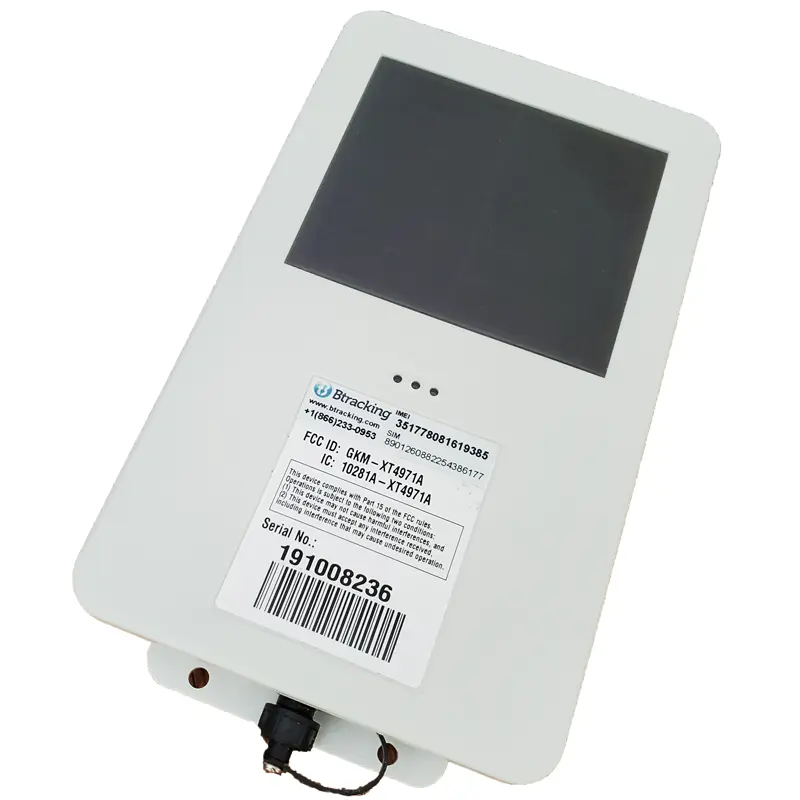
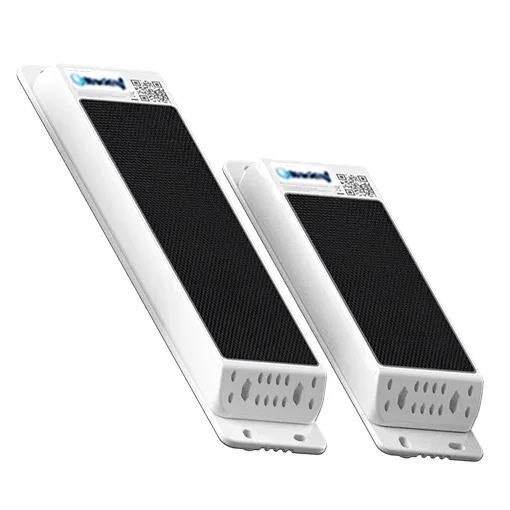
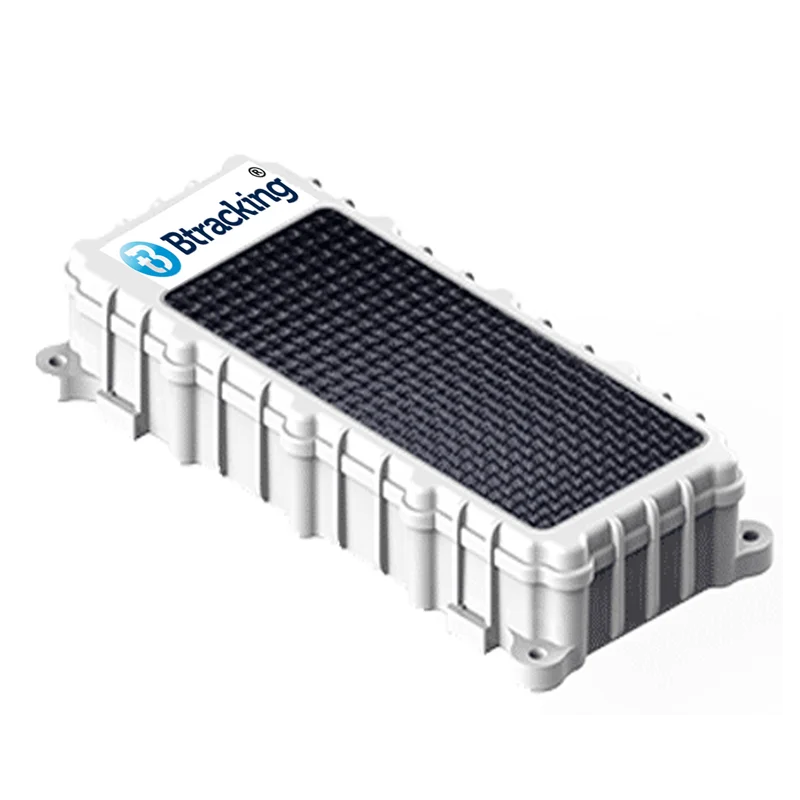
Solar trackers suit trailers that park in the open with consistent sky exposure and would drain a conventional battery under frequent reporting schedules. Btracking's solar range runs from the BS110 Mini Solar Powered Asset Tracker at $119.99 through the BS120 ($169.99) and BS130 ($189.99) to the BS400 Deluxe Solar/Hybrid Combo at $289.99. Each unit wakes on movement and carries a light-sensor removal alarm. For a full explanation of how solar charging works in practice, see solar GPS asset trackers.
Tow-vehicle tracker only
Placing a tracker on the tow vehicle is the lowest-cost entry point and requires no hardware on the trailer at all. While the trailer is hitched, the truck's position is the trailer's position. The limitation is absolute: once the trailer is dropped, there is no further location data for it.
Three hardwired and plug-in options cover this approach:
- BHW920 Compact Hardwired Vehicle Tracker ($59.99), 3.0 × 1.7 × 0.5 inches, ignition sensing, BLE wireless sensor support.
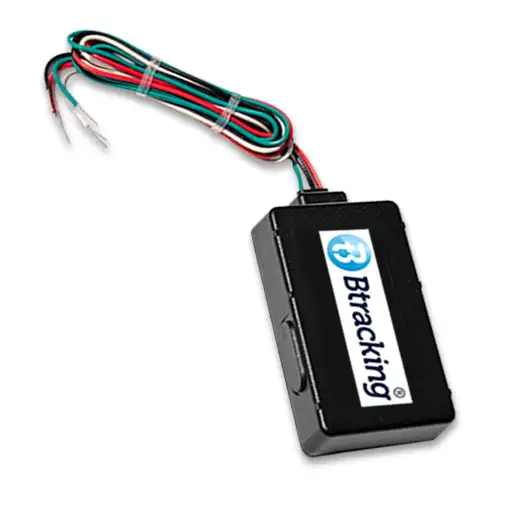
- BHW123 Hardwired Vehicle Tracker ($95.99), 2 digital inputs and 3 digital outputs for door and light monitoring; designed for covert installation.
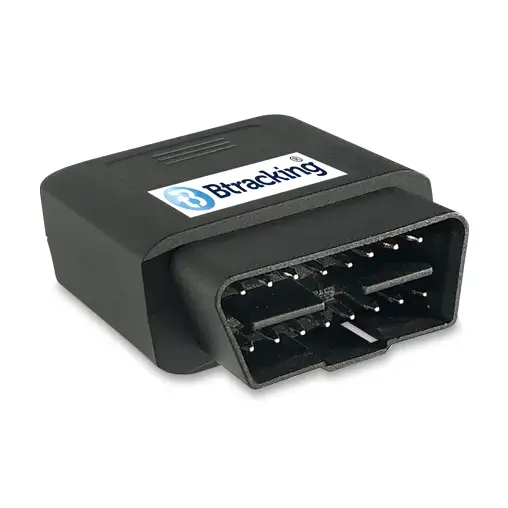
- BP50 Series Plugin Vehicle Tracker ($69.99), plugs directly into the vehicle with no wiring required.
For a detailed comparison of these installation types, see plug-in vs hardwired vs battery trackers.
The reporting cycle of a battery trailer tracker
Battery trailer trackers do not transmit continuously; they follow a motion-triggered duty cycle that conserves the battery between movements.
How it works
- 1Parked and asleep.While the trailer is stationary, the tracker operates on its configured low-frequency schedule, transmitting infrequently to preserve battery charge.
- 2Motion detected.The built-in triple-axis accelerometer senses movement or tilt and signals the device to wake from its low-power state.
- 3Active reporting while moving.The tracker increases its transmission frequency for the duration of movement, providing higher-resolution location data.
- 4Motion ceases, schedule resumes.Once movement stops, the tracker returns to its parked interval, extending battery life until the next event.
This cycle is the mechanism behind every headline battery-life figure in the product range, and the reason those figures carry conditions.
Configured report schedules. Hardwired and plug-in vehicle trackers report every minute when moving and every 6 hours when stopped. For solar asset trackers, every 5 minutes when moving and 1 hour when parked is described as a good balance. Battery-only trailer trackers follow the same principle: the parked interval is where the battery is preserved.
What the headline figures actually assume. Each rated life corresponds to a specific duty cycle:
- BB502 Trailer Asset Tracker, 57,000 mAh Li-SOCl₂ battery; rated for up to 10 years and up to 16,000 messages (no specific report rate stated)
- BB300 Mini Asset Tracker, replaceable Li-Ion battery; up to 3 years at 1 report/day
- BB200T Mini Multipurpose Tracker, up to 4 years at 1 cell-tower report/day; up to 3 years at 1 GNSS report/day
- BB100Q Micro Multipurpose Tracker, 2,400 mAh Li-MnO₂ battery; up to 4 years at 1 cell-tower report/day; up to 3 years at 1 GNSS report/day
- BHY212B Hybrid Asset Tracker, 9,600 mAh Li-Ion battery; approximately 12 months off power at 5 reports/day
- BHY212B (active tracking, 2 hr/day, no charge), 9,600 mAh Li-Ion battery; 320 days at 10-min reporting · 170 days at 5-min reporting · 68 days at 1-min reporting
- BHYP ProFleet Ultimate Hybrid, 7,800 mAh Li-Ion battery; up to 5 years off power at 2–3 reports/day
The pattern is consistent across every SKU: battery life and report frequency move in opposite directions. A BB300 rated at 3 years at 1 report per day will exhaust its battery well before that mark if the report interval is set to every few minutes. The BHY212B makes this explicit: the same 9,600 mAh battery supports 320 days at 10-minute reporting but only 68 days at 1-minute reporting under the same 2-hours-active-per-day condition.
A battery tracker configured to report every few minutes will not reach its rated battery life. Match the report schedule to the trailer's actual movement pattern: infrequent for assets that sit for days, more frequent only when operational tempo justifies the trade-off.
Mounting and concealment
Mounting options and concealment potential vary significantly across device classes, and the right choice depends on asset type, power availability, and the degree of discretion required.
Hybrid trackers: placement constrained by harness length
The BHY212B Hybrid Asset Tracker must be positioned within reach of a 12/24 V power feed. Two harness lengths are available, 30 cm (1 ft) and 3 m (10 ft), so the unit must sit within that radius of the connection point. It supports magnet, screw, or adhesive mounting on an IP66 enclosure, but the wiring run itself limits placement flexibility.
Large battery trackers: durable but bulky
The BB502 Trailer Asset Tracker measures 9.7 × 2.3 × 2.4 inches and weighs 25 oz, the largest and heaviest battery-only unit in the lineup. Its IP68 enclosure and optional magnet mount kit ($14.99) or steel lanyard kit ($14.99) suit exposed mounting on trailer frames or undercarriages, but its physical footprint makes true concealment difficult. It is designed for durability and long service life on non-powered trailers and equipment, not for covert placement.
Compact battery trackers: progressively easier to hide
The BB300 Mini Asset Tracker (4.3 × 2.3 × 1.1 inches, 7 oz) carries an integrated magnet and bolt holes, allowing attachment to metal surfaces without additional hardware. The BB200T Mini Multipurpose Tracker (3.1 × 2.5 × 1.1 inches) mounts by magnet mount kit or adhesive. The BB100Q Micro Multipurpose Tracker is the most concealable unit in the range: at 2.5 × 2 × 0.8 inches and 2.8 oz, with an included adhesive strip, it is described as a thin footprint ideal for covert installations. All three units detect movement and tilt to increase report frequency while in motion.
Solar trackers: sky exposure is non-negotiable
Solar units require unobstructed daylight to recharge and cannot be installed inside enclosed trailers or under opaque covers. The trade-off for that visibility is a light-sensor removal alarm on each solar model, which raises an alert if the unit is removed. The BS120, BS130, and BS400 all install in seconds via magnet mount or screws on exterior surfaces. The BS400 additionally accepts an optional 12 V/24 V power harness for supplemental wired charging when vehicle power is available.
Every device class (wired, battery, or solar) is a recovery and accountability tool, not a physical deterrent. The value is in shortening the time between a theft event and a confirmed location, not in stopping the event itself.
Which setup fits which trailer
Tow-vehicle tracker only
When a trailer never leaves the truck, a daily-use utility or dump trailer that hitches at the yard and unhitches at the same yard every night, the tow vehicle's GPS position is the trailer's position. Adding a second $12.95/month subscription for a dedicated trailer tracker duplicates coverage you already have. The hardware cost and the recurring fee are hard to justify until the trailer genuinely spends time unhitched and unattended.
Consider
BB502 for trailers that sit for extended periods
The BB502 Trailer Asset Tracker is purpose-built for non-powered trailers and equipment that spend long stretches parked. Its field-replaceable 57,000 mAh lithium thionyl chloride battery pack is rated for up to 10 years and up to 16,000 messages, a capacity that accommodates months of idle storage between active deployments. The IP68 enclosure handles outdoor exposure without maintenance, the built-in motion sensor increases reporting frequency when the trailer moves, and the battery pack is replaceable in the field at $79.99 rather than requiring a device swap.
Buy
BB300, BB200T, or BB100Q where concealment matters
Three compact options cover trailers where a low-profile or hidden installation is the priority. The BB300 Mini Asset Tracker at $99.99 carries bolt holes and an integrated magnet and fits trailers, containers, and small equipment. The BB200T Mini Multipurpose Tracker at $89.99 mounts by magnet or adhesive, detects movement and tilt for adaptive reporting, and includes two months of subscription. The BB100Q Micro Multipurpose Tracker at $89.99 measures just 2.5 × 2 × 0.8 inches, the thinnest footprint of the three, mounts with an adhesive strip, and is rated for covert installations. All three carry replaceable batteries rated up to three years or more depending on report frequency.
Buy
BHY212B or BHYP on equipment or enclosed trailers that tow frequently
Hybrid trackers are the correct choice for powered trailers and equipment that move regularly but may also sit idle. The BHY212B Hybrid Asset Tracker at $139.99 wires into 12/24 V power, recharges its 9,600 mAh battery while connected, and continues on battery when the trailer is dropped, sending coupling and decoupling alerts with exact location each time power is connected or disconnected. Off power, its battery is rated for 320 days at 10-minute reporting, assuming 2 hours of active tracking per day and no charging. The BHYP ProFleet Ultimate Hybrid at $237.49 adds up to 5,000 stored events for areas without cellular coverage and is rated for up to 5 years of position reports off a single charge at 2–3 reports per day; it is exclusive to the ProFleet Platform.
Buy
BSX100 SolarLock on an open utility or dump trailer
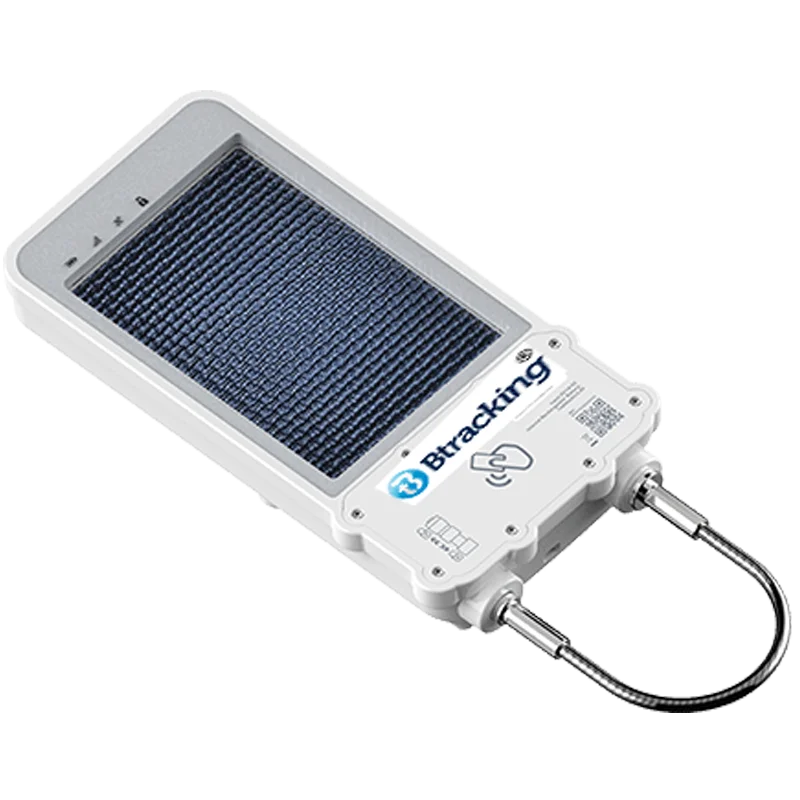
The BSX100 SolarLock Asset Tracker at $349.99 combines GPS tracking with a remotely commanded electronic lock, tamper alarms, cut-rope detection, and rope lengths up to 66 feet to secure multiple doors from a single device. That feature set is well matched to enclosed trailers and shipping containers where door security is the primary risk. On an open utility or dump trailer there are no doors to lock and no enclosed cargo to protect; the lock and alarm functions go unused, and a purpose-built asset tracker at a fraction of the price covers the location requirement adequately.
Skip
Trailers, trucks and tools on one map
Trailers sit on the same platform as trucks, machines, and tagged tools. Geofence entry and exit notices cover yard movements across all asset types, viewable on web and mobile.
Airfield operation case study. A former customer, an airfield operation, tracked ground equipment and towed cargo trailers, both powered and unpowered, using BS400 Deluxe Solar/Hybrid Combo Asset Trackers. Equipment was left in whichever of several parking areas was nearest, making specific units hard to locate quickly. Two scenarios were covered from a single hardware SKU:
- On unpowered towed cargo trailers, the solar-charged battery sustained months of reporting without any external power source.
- On trailers connected to vehicle power while moving, the tracker drew from that supply, recharged its internal battery, and motion detection switched it to a high reporting rate as soon as equipment moved.
Parked equipment was located quickly across the parking areas once the platform was in place.
Machines and small tools. For machines carried on equipment trailers, see the full guidance on GPS trackers for heavy equipment. For small tools, tool-tag options are covered separately. Tool tags are placed on individual tools, not on trailers or vehicles.
Trailers, vehicles, machines, and tools all appear on the same Btracking map, but each asset class uses purpose-matched hardware. Confirm which asset types are in scope before selecting devices, as the correct tracker configuration varies by power availability and duty cycle.
Sort your trailers into those that stay hitched, those that tow often and those that sit for long periods, and match each group to the approaches described above.
Frequently asked questions
How does a trailer GPS tracker work without being plugged into anything?
A self-contained battery trailer tracker carries its own GPS receiver, cellular radio and internal battery, such as the BB502's 57,000 mAh lithium pack rated up to 10 years and up to 16,000 messages, so it reports position over the cellular network without any connection to the tow vehicle or a power outlet. A built-in accelerometer wakes the device when the trailer moves and returns it to a low-power parked schedule when motion stops.
How long does a battery GPS tracker last on a trailer?
Battery life depends directly on report frequency. The BB300 lasts up to 3 years at 1 report per day; the BB100Q and BB200T last up to 4 years at 1 cell-tower report per day or up to 3 years at 1 GNSS report per day; the BB502 is rated for up to 16,000 messages on one field-replaceable battery pack. Setting any battery tracker to report every few minutes will consume the battery far faster than the headline figure.
What is a hybrid trailer tracker and when does it make sense?
A hybrid tracker wires into the trailer's power feed and reports frequently while recharging its battery whenever the trailer is hitched and receiving power; when the trailer is dropped and power is removed it falls back to a battery-powered reporting schedule. The BHY212B ($139.99) is rated up to approximately 12 months at 5 reports per day off power, and it sends coupling and decoupling alerts with exact location, making it well suited to enclosed or equipment trailers that move regularly.
Can I track a trailer for theft recovery without wiring anything?
Yes. A self-contained battery tracker such as the BB100Q (2.5 × 2 × 0.8 inches, adhesive mount, IP67) or BB300 (built-in magnet, IPX7) installs without any wiring and is small enough to conceal. No tracker prevents a theft; it shortens the time to determine that the trailer has moved and where it is, which is what matters for recovery.
Do I need a separate subscription for a trailer tracker if I already track my truck?
Yes. Each purchased tracker on the Standard platform carries its own $12.95-per-month subscription, so a truck tracker and a trailer tracker are two separate monthly charges. For a trailer that is almost never unhitched from the tow vehicle, the truck tracker alone may be sufficient and the second subscription is not warranted.
Products in this guide
BB502 Trailer Asset Tracker
$189.99
BB300 Mini Asset Tracker
$99.99
BB100Q Micro Multipurpose Tracker
$89.99
BHYP ProFleet Ultimate Hybrid Battery Powered Tracker
$237.49
BHY212B Hybrid Asset Tracker
$139.99
BSX100 SolarLock Asset Tracker
$349.99
BS400 Deluxe Solar/Hybrid Combo Asset Tracker
$289.99
BS130 Solar Powered Asset Tracker
$189.99
BS120 Solar Powered Asset Tracker
$169.99
BHW123 Hardwired Vehicle Tracker
$95.99
BP50 Series Plugin Vehicle Tracker
$69.99
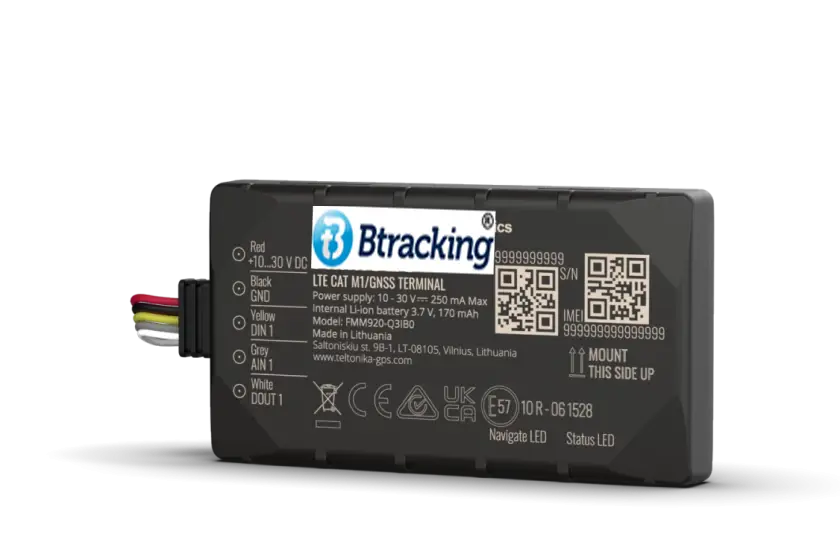
BHW920 Compact Hardwired Vehicle Tracker
$59.99
Get a written quote
Tell us what you run. An engineer confirms the details and prices it.
Request a quote