
Table of Contents
15 min read
Fleet Tracking Buyer's Guide: How to Evaluate GPS Providers in 2026
To evaluate a fleet GPS provider competently, first define whether you have a tracking problem, a dispatch problem, or a maintenance problem, because…


Size the Problem Before You Shop: Vehicles, Assets, and the Daily Question You Need Answered
Start with the operational question you need answered every day, not with a vendor's feature list, because the answer determines which product category you're shopping in.
The first cut is physical: count your powered vehicles separately from your unpowered assets (trailers, generators, construction equipment, containers). A powered vehicle can run a hardwired or OBD tracker that draws constant power and reports continuously. An unpowered asset needs a battery-backed device on a different reporting schedule. Mixing these up early leads to hardware that either drains batteries in days or misses the data you actually need.
The second cut is the core problem you're solving:
- Where are things?, pure location visibility. A GPS tracker and a basic software subscription may be sufficient.
- How do I coordinate jobs?, dispatch, routing, and proof-of-delivery. That's fleet-management software, not just a tracker.
- How do I keep vehicles on the road?, maintenance scheduling, service intervals, driver scorecards. Also fleet-management software, and typically a higher tier of it.
A buyer who needs dispatch-and-routing or maintenance scheduling is purchasing a fleet-management platform. Evaluating it on tracker price alone misses most of the cost and most of the value.
Btracking's three platform tiers, Standard, ProFleet, and Enterprise illustrate this directly: dispatch and routing, driver scorecards, maintenance tracking, and proof-of-delivery forms are distributed across those tiers, and tier decides feature access, not just price. Hardware can be tier-bound as well, confirm which platform a specific device requires before you build a quote, because the wrong pairing can lock you out of features you're counting on.
Electronic logging device (ELD) mandates are a separate regulatory product category. This guide does not cover ELD-certified solutions; if hours-of-service compliance is a requirement, evaluate that need independently before selecting any platform here.
One structural question to settle before you read any further: are you solving a tracking problem, a dispatch problem, or a maintenance problem? The rest of this guide is organized around that distinction.
The Hardware Decision: Match the Device to How the Asset Is Powered and How Long You Keep It
Hardware selection comes down to two variables: how the asset is powered and how long you intend to keep it in your fleet. Get those two answers first, and the right device follows logically.
Rotating or Leased Vehicles, OBD Plug-In
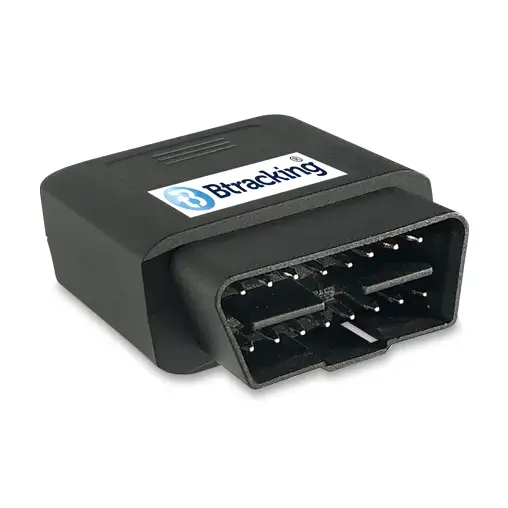
For vehicles your fleet does not own permanently (rentals, leases, vehicles that rotate between operators) a plug-in OBD tracker is the correct choice. It installs and removes in seconds with no wiring, leaves no trace, and does not require an electrician. Hardwiring a tracker into a vehicle you do not own creates a liability and a recovery problem when the vehicle leaves. The BP50 Series Plugin Vehicle Tracker ($69.99) covers the standard use case, and the BP304 Deluxe Plugin Vehicle Tracker ($159.99) adds full programmability, a broader OBD-II data set (including DEF levels, diesel particulates, transmission fluid temperature, and tire pressures), and developer-facing customization for more demanding applications.
For a deeper comparison of plug-in versus hardwired versus battery approaches, see OBD vs Hardwired vs Battery GPS Tracker.
Owned Vehicles with Permanent Installs, Hardwired
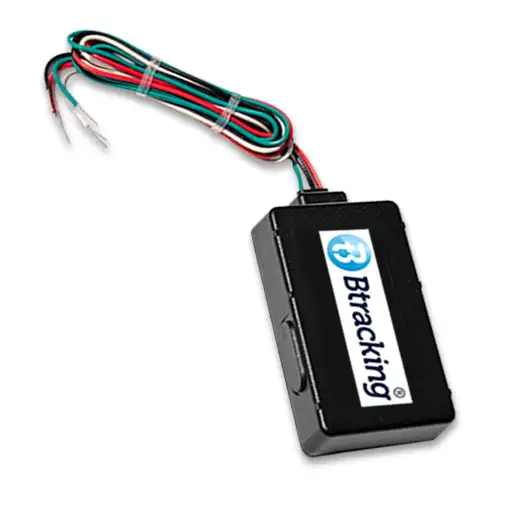
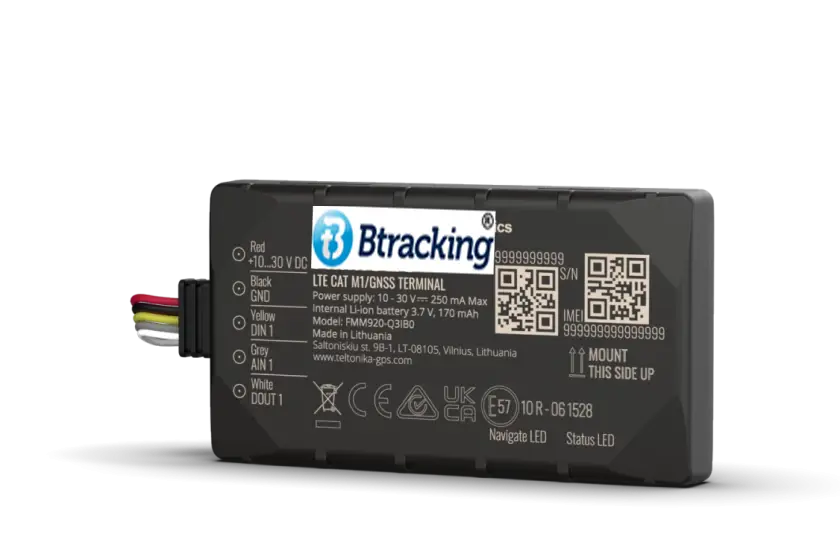
When you own the vehicle and want a concealed, permanent install, hardwired is the right path. The BHW920 Compact Hardwired Vehicle Tracker at $59.99 is the right fit for straightforward location and driver-behavior monitoring in a compact, easily hidden form factor. Step up to the BHW123 Hardwired Vehicle Tracker ($95.99) when the application requires wired I/O events: it carries 2 digital inputs and 3 digital outputs, supporting door open/closed, lights on/off, and PTO on/off monitoring. The BHW123 reports location every minute when moving and every six hours when stopped, with both intervals customizable.
The BHW123's triple-axis accelerometer handles motion and tilt detection only: it does not deliver driver-behavior scoring or OBD vehicle diagnostics. If those are required, choose a plug-in or telematics gateway instead.
Eligible Late-Model Vehicles, OEM Integrated
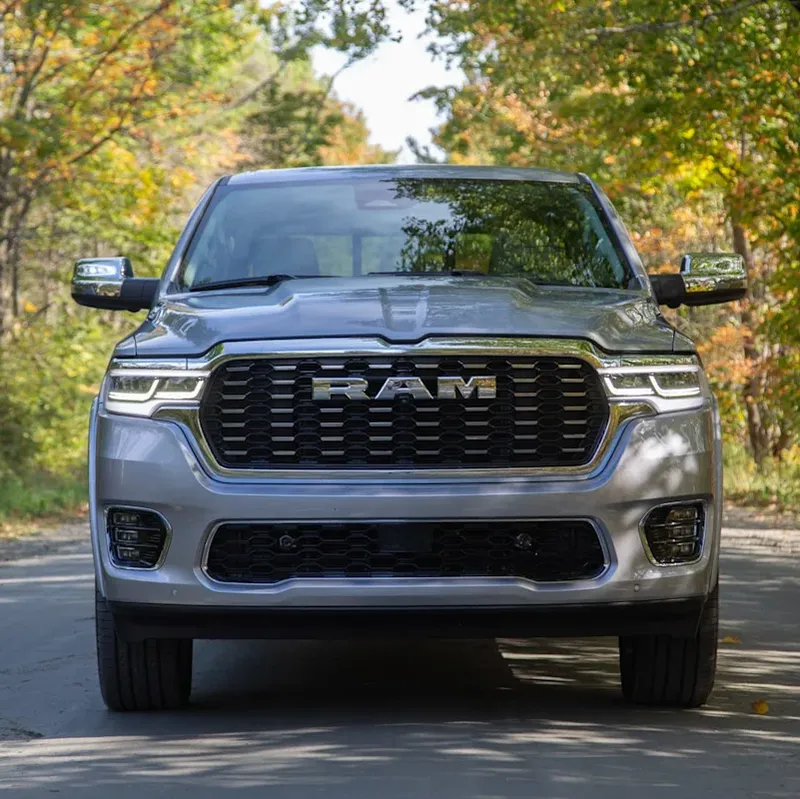
For Ford, GMC, and Stellantis vehicles, OEM Integrated tracking taps the factory-embedded telematics system at $31.99/month per vehicle with nothing to install. Eligibility must be confirmed by submitting the VIN to Btracking before purchase, and owner consent is required for each vehicle. All three OEM options are exclusively for the Enterprise Platform.
The firm constraint: reporting frequencies and all other configurations are set by the vehicle manufacturer and are not customizable. Fleets that need to define their own reporting intervals should not choose OEM Integrated, a hardwired or plug-in device will serve them better.
Trucks Requiring Telematics Gateways
Telematics gateways go beyond location to support cargo climate monitoring, driver communication, and extensive I/O expansion. Three devices cover this tier, but platform compatibility is not interchangeable:
- The BTSTX ProFleet Truck Tracker ($219.99) is exclusively for the ProFleet Platform.
- The BT364 Deluxe Truck Tracker ($239.99) supports Standard or Enterprise, adds WiFi and BLE for integrated dashcams.
Confirm your platform tier before pricing any of these, the wrong device will not function on the wrong tier.
Unpowered Trailers and Equipment, Solar/Battery
Assets with no power connection need self-contained trackers. Battery life figures on these devices are always conditional on solar exposure and reporting frequency, a number quoted without those conditions is not meaningful. For a full treatment of solar tracker selection, see Solar GPS Asset Trackers, No Wiring.
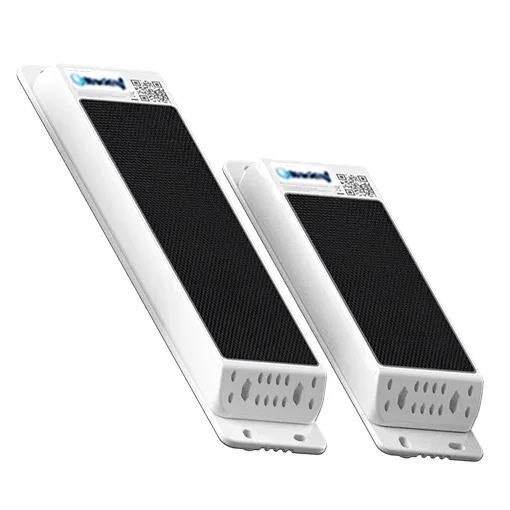
- The BS130 Solar Powered Asset Tracker ($189.99) is available with a 15,000 mAh battery (unlimited standby with periodic solar input) or a 7,500 mAh battery (up to 10 years with a couple of hours of sunlight every few days). IP67, magnet-mount or screw-mount.
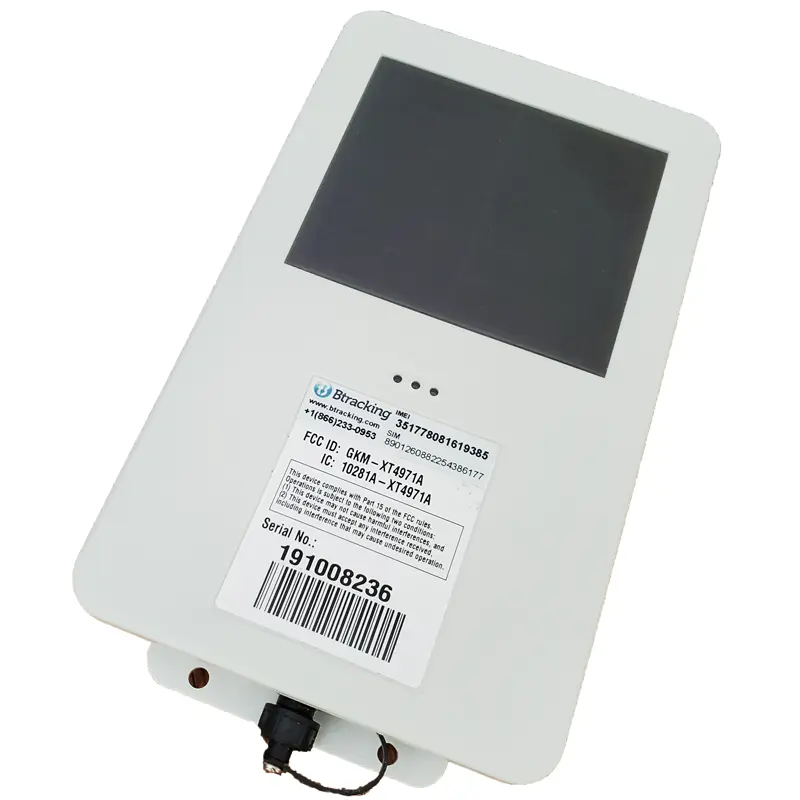
- The BS400 Deluxe Solar/Hybrid Combo Asset Tracker ($289.99) stays fully charged for up to 10 years on roughly six hours of sunlight per day, and runs 12+ months on a single charge with no sunlight at all. It also supports vehicle, machine, and container configurations, plus an optional wired power harness.
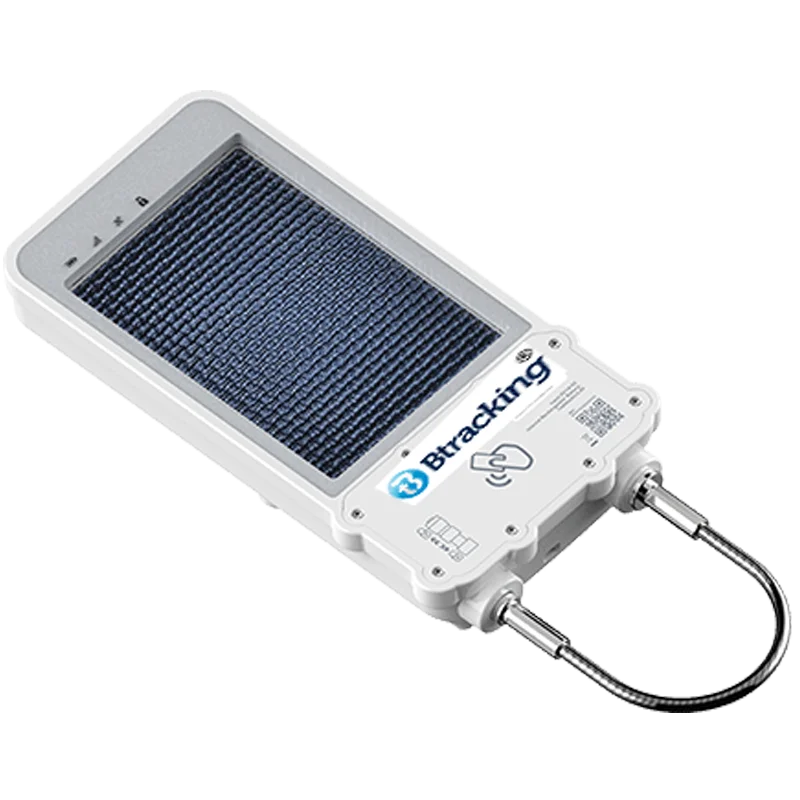
- The BSX100 SolarLock ($349.99) adds an electronic lock that can be released remotely via the platform or SMS, or on-site via RFID card or BLE phone app. Its 14,400 mAh battery lasts approximately 8–12 months on one charge with high solar recharging efficiency. Fleets that only need location should evaluate the BS130 or BS400 first, the SolarLock's price premium is justified by the lock function, which most fleets do not need.
Full Comparison Table
| Asset Type | Device | Price | Power / Install | Verdict |
|---|---|---|---|---|
| Rotating / leased vehicle | BP50 Series Plugin Vehicle Tracker | $69.99 | OBD plug-in, no wiring | Buy |
| Rotating / leased vehicle (advanced) | BP304 Deluxe Plugin Vehicle Tracker | $159.99 | OBD plug-in, no wiring | Buy |
| Owned vehicle, compact concealed install | BHW920 Compact Hardwired Vehicle Tracker | $59.99 | Hardwired, 12/30 v | Buy |
| Owned vehicle, I/O events needed | BHW123 Hardwired Vehicle Tracker | $95.99 | Hardwired, 2 inputs / 3 outputs | Buy |
| Late-model Ford (owned) | Ford OEM Integrated | $31.99/mo | No hardware, Enterprise Platform only | Consider, only if configurable reporting is not required |
| Late-model GMC (owned) | GMC OEM Integrated | $31.99/mo | No hardware, Enterprise Platform only | Consider, only if configurable reporting is not required |
| Late-model Stellantis (owned) | Stellantis OEM Integrated | $31.99/mo | No hardware, Enterprise Platform only | Consider, only if configurable reporting is not required |
| Truck, ProFleet Platform | BTSTX ProFleet Truck Tracker | $219.99 | Hardwired telematics gateway | Buy |
| Truck, Standard or Enterprise Platform | BT364 Deluxe Truck Tracker | $239.99 | Hardwired telematics gateway | Buy |
| Truck, alternative gateway | BTPLUS ProFleet Truck Tracker | $239.99 | Hardwired telematics gateway | Buy |
| Unpowered trailer / container | BS130 Solar Powered Asset Tracker | $189.99 | Solar/battery, magnet or screw mount | Buy |
| Unpowered trailer / container (deluxe) | BS400 Deluxe Solar/Hybrid Combo Asset Tracker | $289.99 | Solar/hybrid, magnet or bolt mount | Buy |
| Trailer / container with theft-lock need | BSX100 SolarLock | $349.99 | Solar/battery, built-in magnet mount | Consider, only if the electronic lock function is required; otherwise evaluate BS130 or BS400 |
The Subscription Decision: Where the Real Cost Accumulates
The device is a one-time cost; the platform subscription runs every month for as long as you track that asset, which means the subscription is the larger financial commitment for any asset you intend to keep for more than a few months.
How the subscription tiers work with purchased hardware
When you buy a tracker outright, the monthly platform rate is $12.95 on Standard, $14.95 on Enterprise, or $16.95 on ProFleet (ProFleet is available only with CANBus vehicle data models). OEM Integrated tracking (which requires no physical hardware installation on supported Ford, GMC, and Stellantis vehicles) runs $31.99/month on Enterprise. All plans are month-to-month and can be cancelled with ten business days' notice, so you are never locked into a term.
The free-tracker path: what it actually costs
Btracking also offers a free plug-in or hardwired vehicle tracker as an alternative to purchasing hardware. The trade-off is a higher monthly rate ($13.95/month on Standard instead of $12.95) plus a one-time activation fee: $20 for a hardwired unit, $20 for a plug-in without CANBus data, or $25 for a plug-in with CANBus. The device may be a used unit, and it remains Btracking property throughout. If you end the subscription, you must return the tracker in proper working condition; if you cannot, an $85 device buyout fee applies, and warranty coverage terminates at that point.
Purchased hardware vs. free tracker: the long-run comparison
A buyer who plans to track an asset for several years will generally pay less in total by purchasing hardware outright. The entry-level hardwired tracker is $59.99 and the most capable hardwired option with multiple I/Os is $95.99, with plug-in CANBus units at $69.99, all owned by you from day one, subscribing at $12.95/month on Standard with no return obligation and no buyout exposure. The free-tracker path saves the upfront hardware cost but costs $1.00/month more on Standard and carries the $85 exit fee if the device cannot be returned working. For a single asset tracked over two or three years, the purchased route typically comes out ahead on total spend.
The free-tracker option is most rational for a buyer who is genuinely uncertain whether the program will continue, a pilot deployment, a short-term project, or a situation where capital outlay is the binding constraint right now.
Warranty coverage terminates upon device buyout. If you take the free-tracker path and later pay the $85 buyout fee to keep the device, you lose warranty protection from that point forward, factor that into the exit cost.
For a fuller breakdown of how these numbers compound over a fleet's lifetime, see What Fleet GPS Actually Costs.
Buy, purchased hardware at $59.99–$95.99 + $12.95/month Standard for any asset you expect to track for more than a year; the math favors ownership and you carry no return or buyout obligation.
Consider, the free-tracker path if you are running a short pilot or need to defer hardware spend, and you are confident you can return the device in working condition when the program ends.
Skip, the free-tracker path if you are committing to multi-year tracking; the $1.00/month premium and the $85 buyout exposure make it the more expensive option over time.
The Question List: What to Ask Every Vendor Before Signing
A vendor that cannot answer these questions cleanly is telling you something. Work through every item below with any provider you evaluate, including Btracking. An evasive or incomplete answer is a signal, not a minor gap.
1. Is the per-asset monthly rate published, and what is it?
You should be able to find a number without talking to sales. Btracking publishes rates openly: subscriptions start at $12.95/month on the Standard platform when you purchase your own tracker. The free-hardware path runs $13.95/month on Standard plus a one-time activation fee.
Ask every other vendor: Where on your website is the per-asset monthly rate?
2. What is the contract term, and what is the cancellation notice period?
Btracking subscriptions run month-to-month and require ten business days' notice to cancel. There is no annual lock-in.
Ask every other vendor: What is the minimum term, and how many days' written notice do I need to give?
3. Who owns the device at the end?
Ownership determines your exit options. Hardware you purchase outright from Btracking is yours, no return required if you cancel. The free-hardware path is different: that device remains Btracking property, and ending the subscription means returning it in proper working condition or paying an $85 buyout fee.
If you choose the free-tracker option and later cancel, you either ship the device back in working condition or pay $85 per unit. Factor this into your total cost, especially for large deployments.
Ask every other vendor: Who owns the hardware if I cancel, and what are my return or buyout obligations?
4. What is the battery life at the reporting frequency you actually need, not the best case?
A battery figure without its conditions is not a spec. On Btracking's solar and hybrid asset trackers, the numbers are always paired with duty-cycle assumptions:
- BS400 Deluxe Solar/Hybrid, stays fully charged for up to 10 years on approximately six hours of sunlight per day; sends locations for 12+ months on a single charge with no sunlight at all.
- BS130 (15000 mAh), unlimited standby power with a couple of hours of sunlight every few days.
- BS130 (7500 mAh), rated up to 10 years under the same light condition.
If a vendor quotes a single battery-life number with no mention of reporting interval, sunlight exposure, or temperature, ask them to show you the full conditions table.
Ask every other vendor: What reporting interval and environmental conditions does that battery-life figure assume?
5. What happens to your data if you leave?
This is a question the guide cannot answer for vendors other than Btracking, and any vendor that sidesteps it deserves follow-up. Ask specifically: In what format can I export my historical data, how long after cancellation is it available, and is there a fee?
6. What does "support" mean, and where are those people?
Btracking's support engineers are U.S.-based.
Ask every other vendor: In which country are your frontline support engineers located, what are their hours, and what is the escalation path?
7. Is the warranty conditional on maintaining a subscription?
Btracking's lifetime hardware warranty holds while a subscription runs continuously. If a subscription is suspended, coverage falls back to a one-year-from-purchase warranty. Warranty coverage terminates entirely upon device buyout.
Ask every other vendor: Does your warranty require an active subscription, and what exactly voids it?
8. On OEM Integrated tracking, who controls reporting frequency?
On Btracking's OEM Integrated GPS Tracking, data comes from the vehicle manufacturer's built-in system. Reporting frequencies and other configurations are set by the OEM and are not customizable through Btracking's platform.
Ask every other vendor offering OEM-integrated data: Which settings are locked by the manufacturer, and which can I configure myself?
How to use this list: Send it in writing before any demo. A vendor that answers every question directly, in writing, without redirecting you to a sales call, has already demonstrated something meaningful about how they will treat you as a customer.
How to Run a Short Pilot Before Committing the Fleet
A pilot on a small number of assets, before deploying across the fleet, is the most reliable way to confirm that a platform actually answers the daily operational question your business depends on, not just that it looks good in a sales demo.
Choose assets that represent the full range of your use cases. A well-structured pilot includes at least one rotating vehicle (high-utilization, multiple drivers), one owned vehicle with a predictable route, and an unpowered trailer or asset if your operation uses them. That spread will surface any gaps in coverage, alert logic, or reporting before they become fleet-wide problems.
Run for at least one full billing cycle. A single month forces you to test more than the tracking function. You will see whether the cancellation process is straightforward, how quickly support responds to a real question, and whether data can be exported in a format your team can actually use. A platform that tracks well but locks your data or goes silent when something breaks is not a platform you want across fifty vehicles.
Verify the specific output your operation needs. A generic demo shows a map with dots. A pilot shows whether the platform delivers the exact report or alert (a maintenance-due notification, a geofence breach, a proof-of-delivery form) that your dispatcher or operations manager will act on every day. If it cannot produce that output in the pilot, it will not produce it at scale.
What Btracking's terms make possible for a pilot. Purchased hardware qualifies for a 30-day money-back guarantee from the ship date, covering up to two devices of each type or model; AirTrackers are excluded from this guarantee, and subscriptions are not refundable. That window is enough to validate hardware performance and basic platform fit. Beyond the 30 days, the month-to-month subscription structure, cancellable with ten business days' notice, means the pilot can be extended or ended without penalty. There is no contract to negotiate out of.
The 30-day money-back guarantee covers purchased hardware only, up to two devices per type or model. Budget the subscription cost as a sunk testing expense, not a recoverable one.
A buyer who skips a pilot on any vendor's platform before fleet-wide deployment is accepting avoidable commercial risk. The cost of a one- or two-device pilot, at $12.95/month per vehicle on the Standard subscription, is a rounding error against the cost of rolling out the wrong platform to an entire fleet and unwinding it six months later.
Frequently asked questions
how much does fleet GPS tracking cost per vehicle per month
With a purchased tracker on Btracking's Standard platform, the subscription is $12.95 per vehicle per month. The alternative free-tracker path costs $13.95 per month on Standard plus a one-time activation fee, but the device remains the provider's property and must be returned or bought out for $85 when the subscription ends.
what contract length do fleet GPS tracking providers require
Contract terms vary by provider and should be confirmed in writing before signing. Btracking subscriptions run month-to-month and require ten business days' notice to cancel. Ask any vendor for the exact notice period and whether early termination carries a fee.
do I own the GPS tracker or does the provider
It depends on which purchasing path you choose. Hardware bought outright from Btracking is owned by the customer with no return obligation. Hardware provided free under Btracking's free-tracker program remains Btracking property; ending the subscription requires returning it in working condition or paying an $85 buyout fee.
what is OEM integrated GPS tracking and what are its limitations
OEM Integrated tracking uses the GPS system already built into eligible late-model vehicles, no hardware installation is required. The limitation is that reporting frequency and other configurations are set by the vehicle manufacturer and cannot be customized. Btracking offers OEM Integrated for eligible Ford, GMC, and Stellantis vehicles at $31.99 per vehicle per month on the Enterprise platform.
how long does a solar GPS tracker battery last on a trailer
Battery life depends on solar exposure and reporting frequency. The Btracking BS400 is rated to stay fully charged for up to 10 years with approximately six hours of sunlight per day, or to continue sending locations for 12 or more months on a single charge with no sunlight. The BS130 with a 15000 mAh battery provides unlimited standby power given a couple of hours of sunlight every few days.
what questions should I ask a fleet GPS tracking vendor before buying
Ask: Is per-asset pricing published? What is the contract term and cancellation notice period? Who owns the hardware? What is battery life at your required reporting frequency, not best-case? What happens to your data if you leave? Where is support located? Is the warranty conditional on maintaining a subscription?
Products in this guide
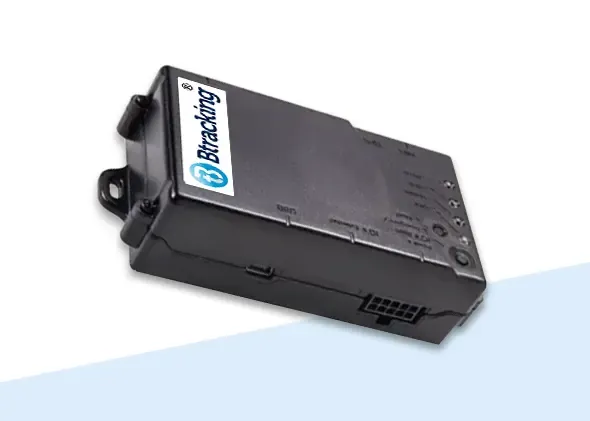
BTPLUS ProFleet Truck Tracker
$239.99
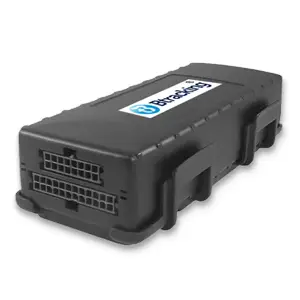
BT364 Deluxe Truck Tracker
$239.99
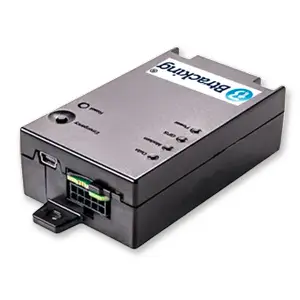
BTSTX ProFleet Truck Tracker
$219.99
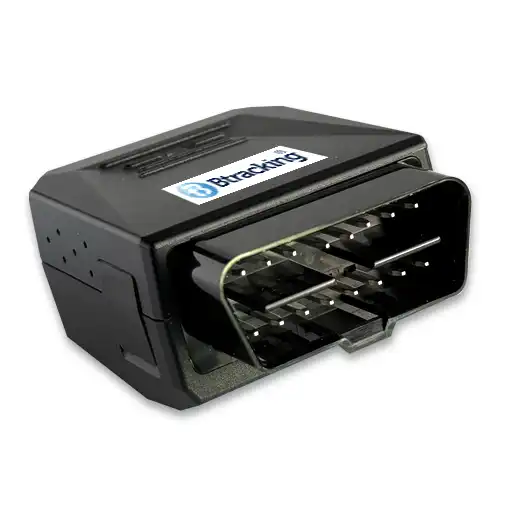
BP304 Deluxe Plugin Vehicle Tracker
$159.99
BP50 Series Plugin Vehicle Tracker
$69.99
BHW57P Motorcycle & ATV Tracker
$95.99
BHW123 Hardwired Vehicle Tracker
$95.99
BHW920 Compact Hardwired Vehicle Tracker
$59.99
Stellantis OEM Integrated GPS Tracking - No Hardware Needed!
$31.99

GMC OEM Integrated GPS Tracking - No Hardware Needed!
$31.99

Ford OEM Integrated GPS Tracking - No Hardware Needed!
$31.99
BSX100 SolarLock Asset Tracker
$349.99
BS400 Deluxe Solar/Hybrid Combo Asset Tracker
$289.99
BS130 Solar Powered Asset Tracker
$189.99
Get a written quote
Tell us what you run. An engineer confirms the details and prices it.
Request a quote